
Wedding photography · Poses
Mehndi poses
 By Anandu G Prakash, co-founder and lead photographer · Updated Friday 20 November 2026
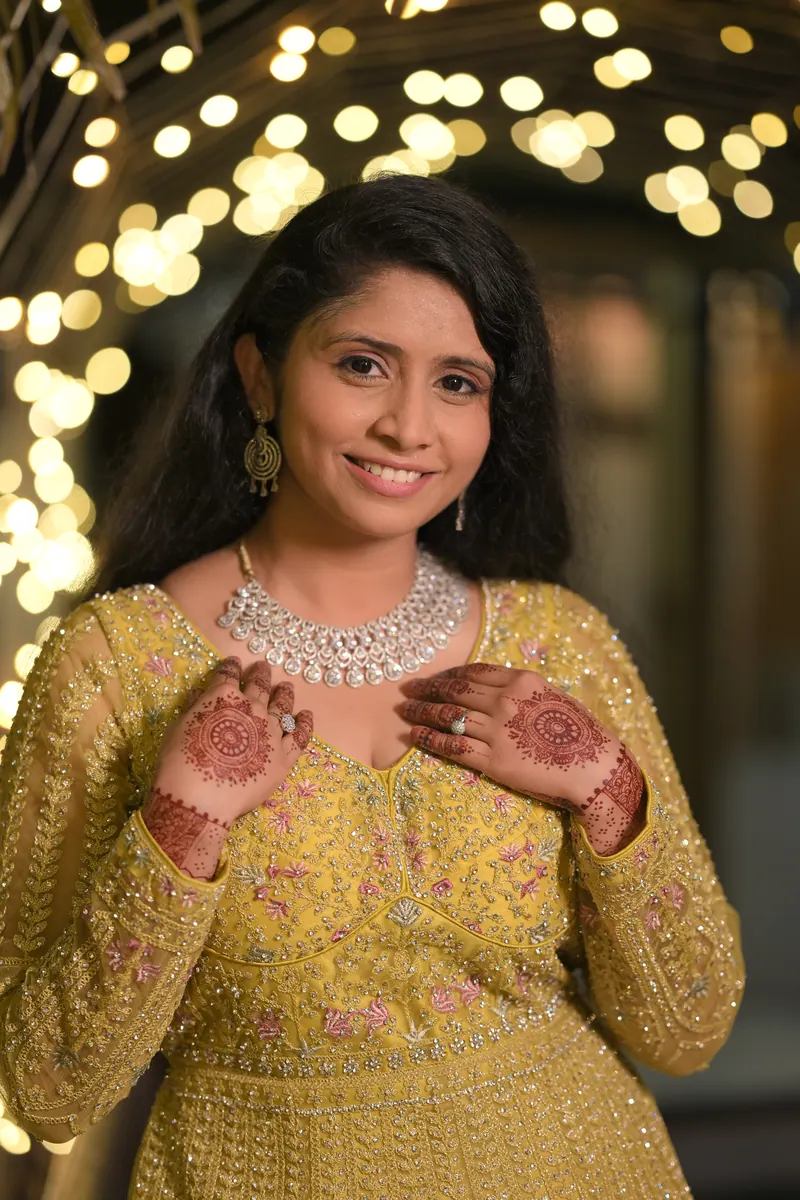
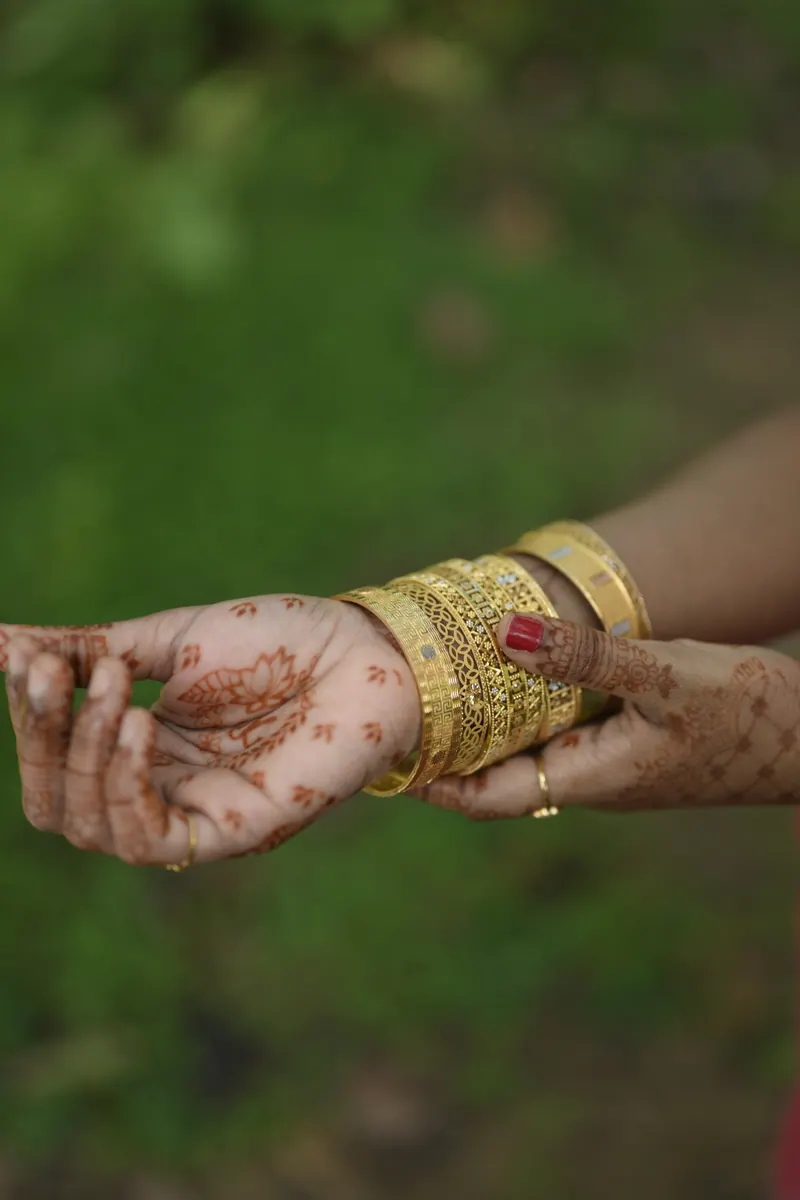
The mehndi poses that work best show the design: palms out to the camera, the back of one hand against your cheek, folded hands at the waist, hands resting on your jewellery, and candid moments where your hands are busy. Bend your wrists, keep your fingers soft, and photograph the close-ups a day or two later, when the stain is darkest.
Your mehndi took an artist hours. It’d be a shame if every photo of it showed a fist. This guide is about one thing: where to put your hands so the design actually makes it into the album.
Every photo here is from a real Kerala wedding we’ve photographed. For the artist, the evening and the lighting, our mehendi photography ideas cover the rest.
12 mehndi poses that show the design
Start with the classic. “The traditional mehndi photograph is more of a wide shot that showcases both hands and an aerial view of the designs” (SLR Lounge). Then work through the rest. You don’t need all twelve; your hands will tell you when they’ve had enough.
| Pose | How to do it | What it shows |
|---|---|---|
| 1. Both palms out | Palms side by side, fingers together, slightly curved | The full palm design in one frame |
| 2. Palms flat on the chest | Both hands just below the collarbone, elbows relaxed | The design and your face together |
| 3. Back of the hand to the cheek | Wrist bent, fingertips just touching your face | The back-of-hand design |
| 4. Hand at the earring | Adjust the earring, look down or away | Mehndi, earring and makeup at once |
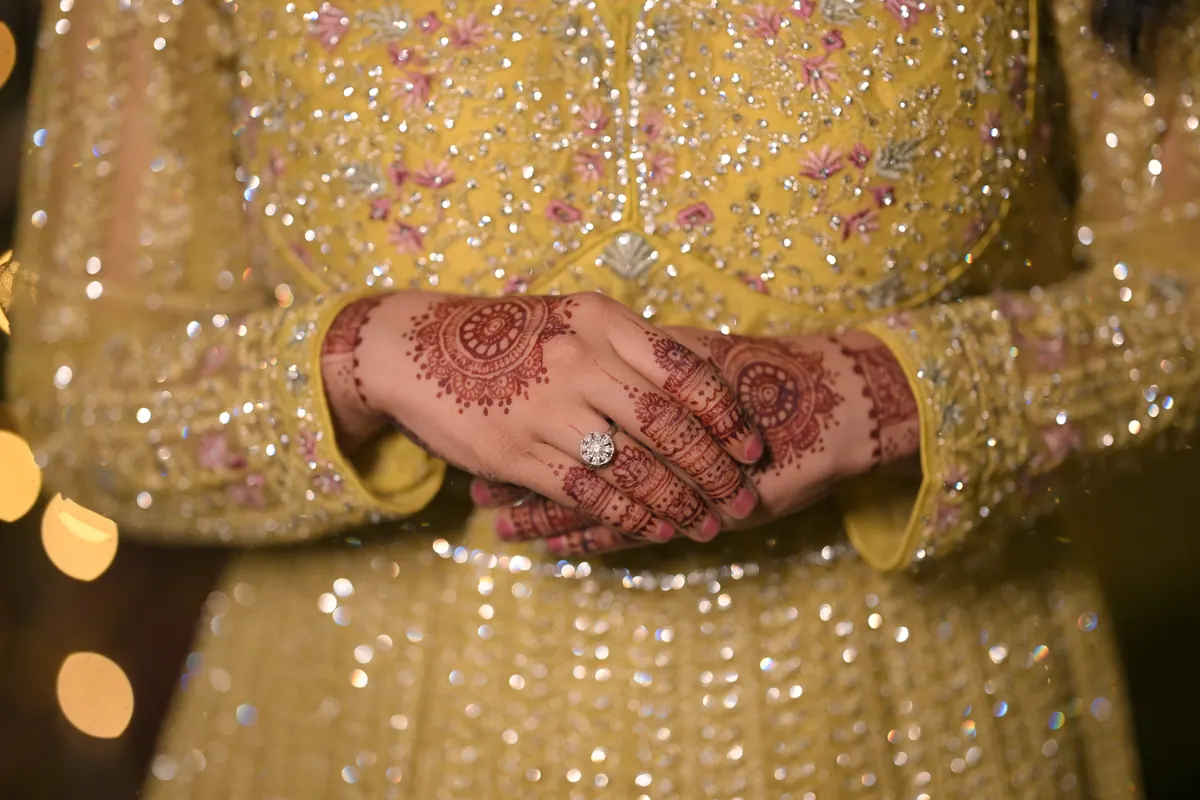
| 5. Folded hands at the waist | One hand resting over the other, ring on top | Both designs, close up |
| 6. Hands on the waist belt | Fingertips on the belt, thumbs tucked behind | Gold and mehndi together |
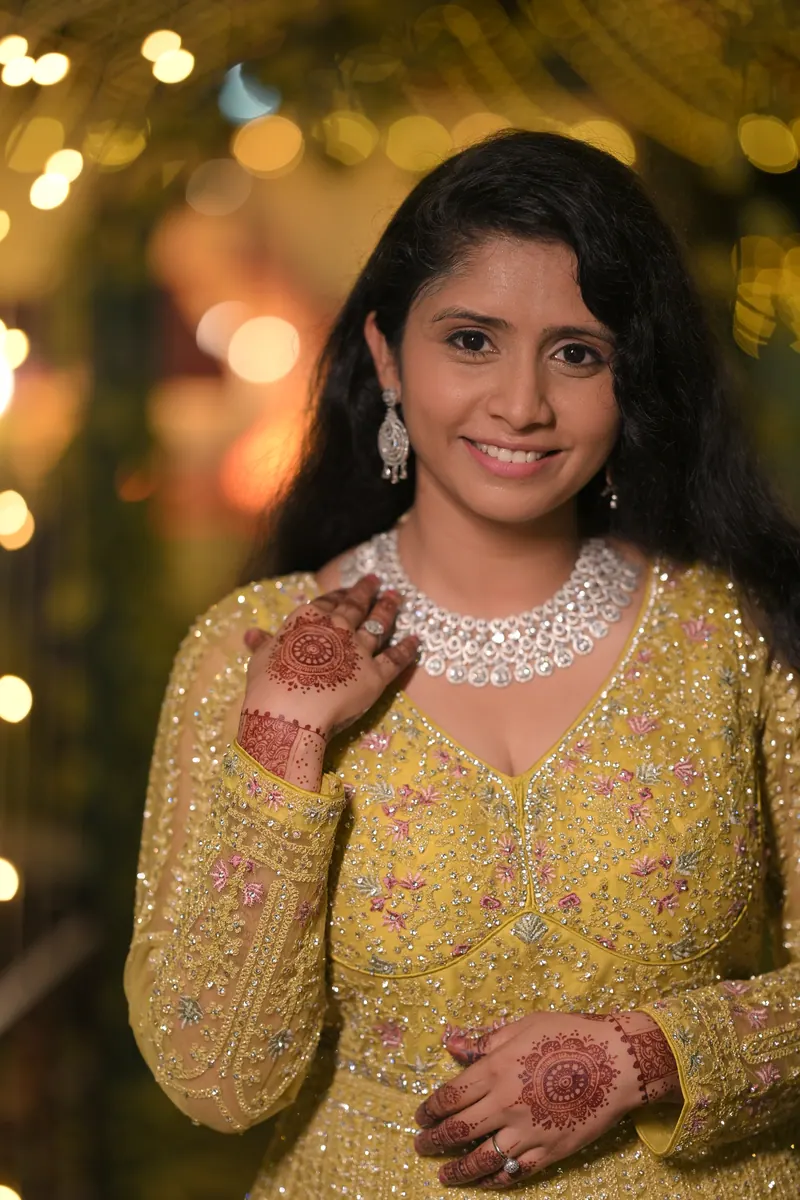
| 7. Hand on the necklace | One hand lightly on the necklace, the other at the waist | A full portrait with the design in it |
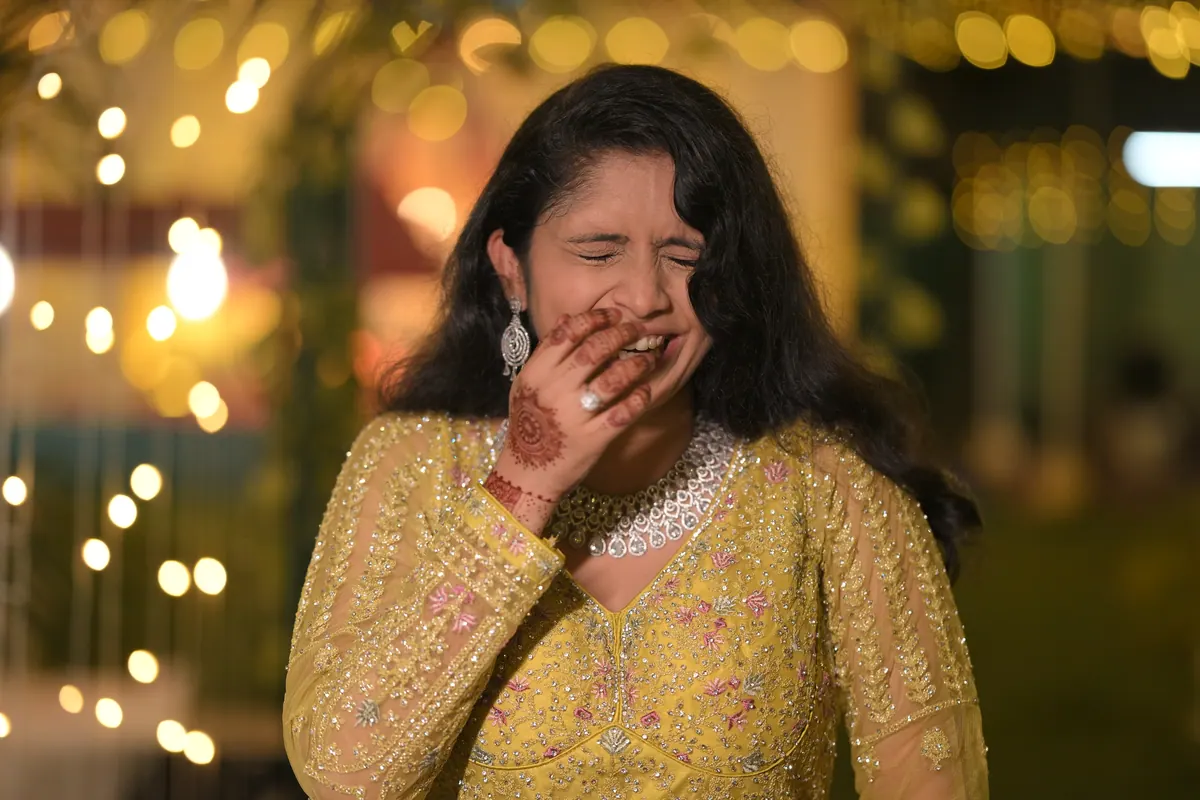
| 8. The laugh behind the hand | Let it happen; don’t pose it | The design, mid-laugh |
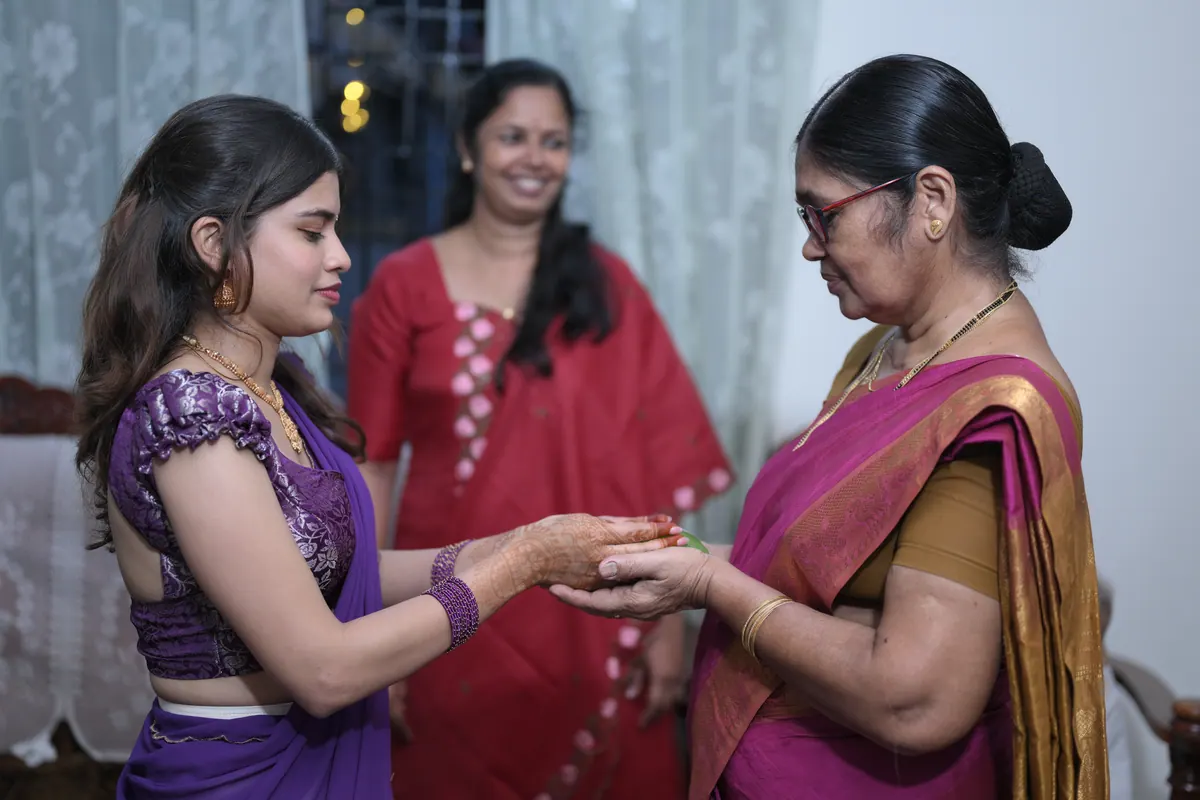
| 9. Giving or receiving | Take sweets, leaves or a gift from a relative | The hands doing something real |
| 10. Seated, palms up on the knees | Low seat, back straight, palms open while the paste dries | Hands and feet in one frame |
| 11. Hands with friends’ hands | Everyone’s hands at a different height | Several designs, one photo |
| 12. The name hunt | The groom searches your palm for his name | The design, and his face losing |
How to hold mehndi hands
Here’s the catch: the pose that shows the most design is often the stiffest. “Front on shots of hands can often look quite blob like” (Digital Photography School), and nobody sat through hours of mehndi for a blob. Turn the hand a little, so the light catches the lines.
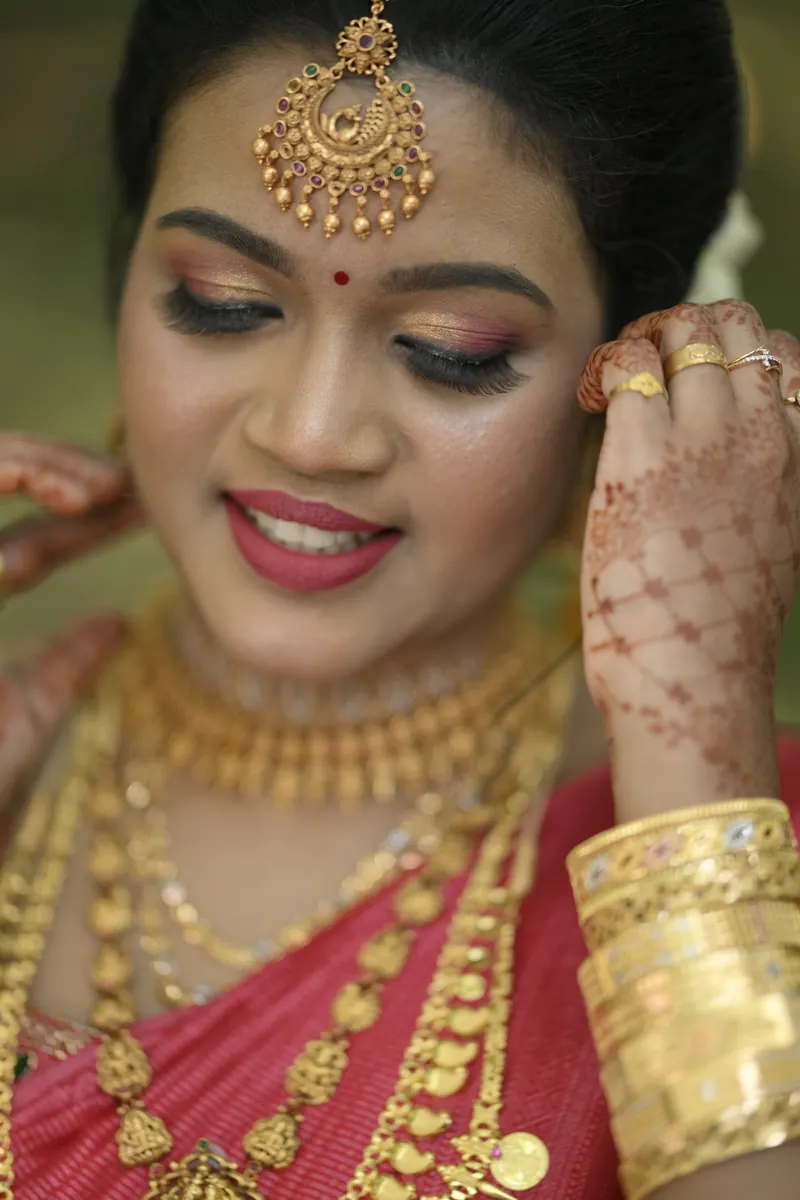
Then fix the wrist. “The straighter the hand, the less dynamic the resulting photo,” so “add a bend to their wrist” (Digital Photography School). And “watch for fingers pointing directly at the lens” (Expert Photography). From the camera, a finger pointing straight at it looks like a stubby sausage, design and all.
Hands stiff anyway? “Fully tense the hand up, then allow it to drop and relax” (Digital Photography School). It works because “a tense hand photo pose communicates unease to the viewer” (Shotkit), and you’re not uneasy. You’re just a bride who’s been told not to touch anything for hours.
Mehndi poses with jewellery
Kerala brides wear a lot of gold, and the gold wants to be in the photo too. Let it share. One trick is to “incorporate her jewelry into the shot by having her hold it or place her hands on it” (SLR Lounge). The heirlooms share the frame, and nobody has to choose.
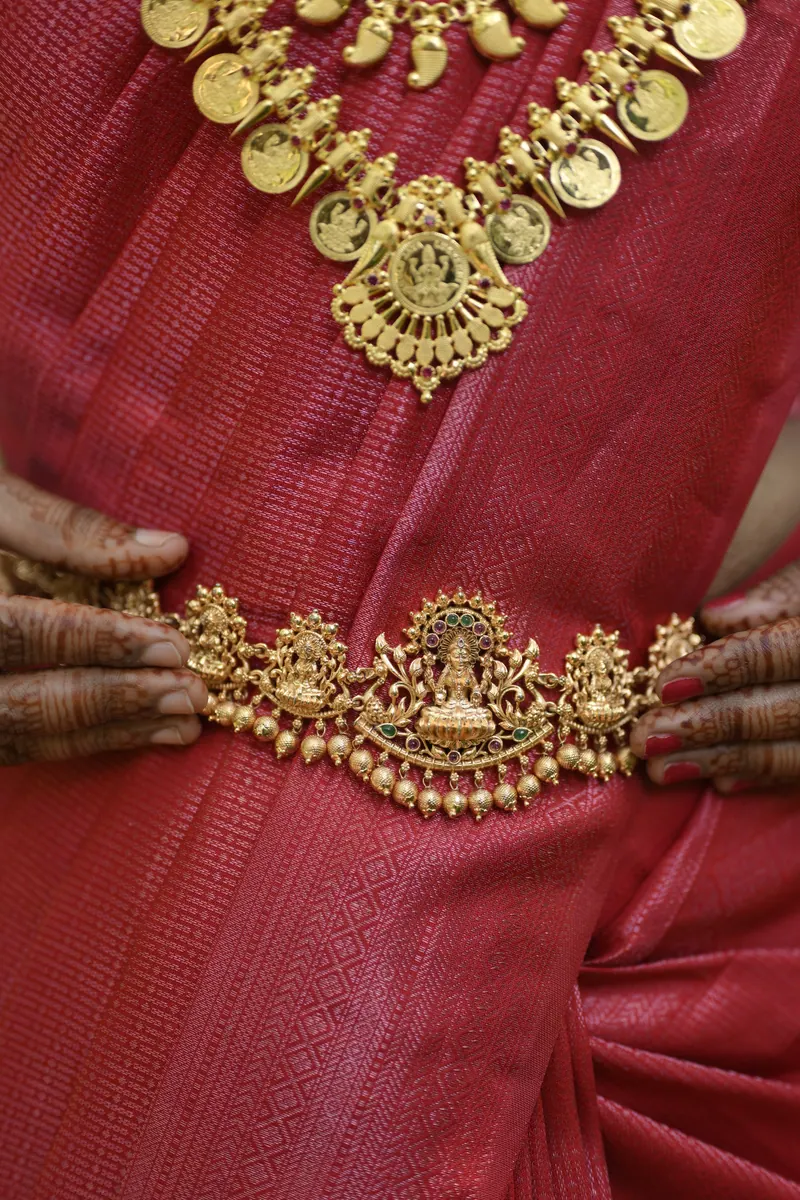
The necklace works the same way: one hand on it, the other relaxed at the waist. It gives the hand a job, which is the whole secret of looking natural. Nobody looks awkward holding a necklace. They’ve had practice.
Candid mehndi poses
The best hand photos often aren’t poses at all. “Sometimes the best thing to do with hands is to give them something to hold or do” (Digital Photography School). At a Kerala wedding, relatives will happily supply the something.
Then there’s the laugh. A cousin says something unrepeatable, a hand flies up to the mouth, and the design ends up right next to the biggest smile of the night. You can’t pose this one. You can only stand near the cousin.
I’ve photographed more than 1,000 weddings, and almost every bride hides her hands the moment the camera turns to her. At the mehndi, it’s the one day she shouldn’t.
Mehndi poses for the groom
Grooms get mehndi too. “In many traditions, the groom and other family members or guests also receive henna designs” (Wikipedia). Theirs are smaller: grooms “almost always prefer minimalistic designs that express their personalities” (WeddingSutra). A small design needs a close photo, so keep his poses tight.
Put his palm next to hers, or her hennaed hands over his. Or play the name hunt: “Sometimes mehndi artists scatter the letters of the name so make sure you try and capture them all” (SLR Lounge). Every groom says he’ll find it in ten seconds. Every groom is wrong.
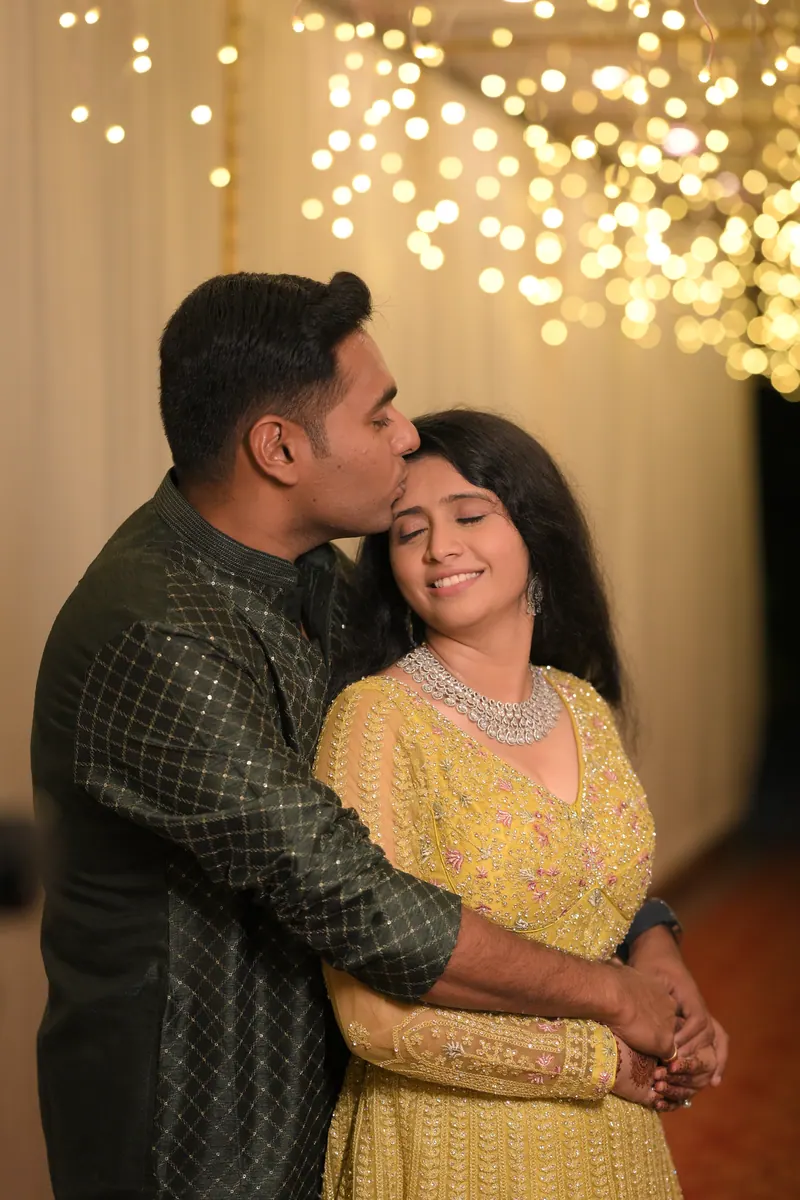
Mylanchi night poses in Kerala
In Kerala, henna has its own name and its own night. “Applying henna paste (mylanchi) on the bride’s hands and feet is another ceremony of the wedding eve connected with Oppana dance” (Kerala Tourism). The pose comes built in: “the bride is seated on a stool while young women dance gracefully around her” (Kerala Tourism). Sit tall, hands open on your knees, and let the circle do the moving.
It isn’t only Malabar. At Knanaya Christian weddings, “Mylanchi Ideel is beautification of the bride with green henna paste” (Knanayology). And Hindu weddings have caught up fast: “the mehendi is now as important as the muhurtham” (Deccan Herald). Even the grandmothers have opinions on the design now.
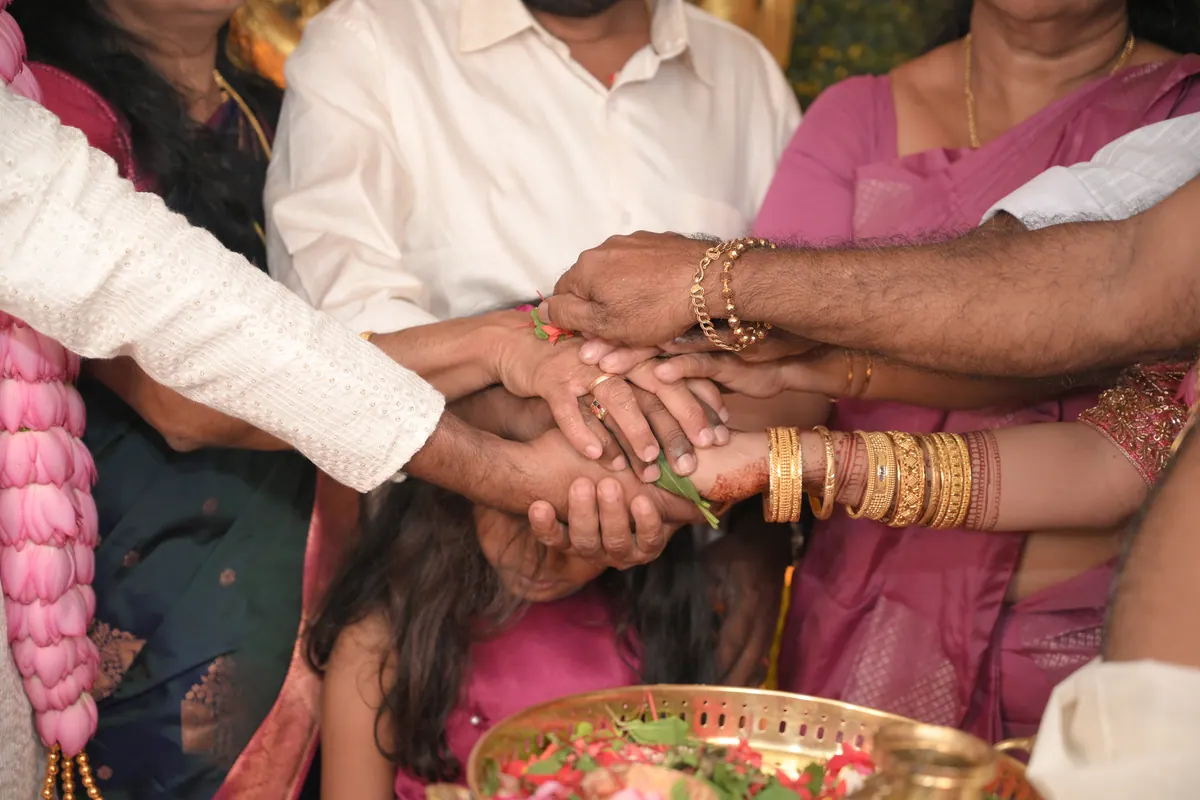
Mylanchi was always a group job: “the mehendi drawing used to be a collective process enjoyed by women and children” (Onmanorama). So take the group hand photo, and “have their hands at different heights and angles” (SLR Lounge). Ten identical hands in a row looks like a glove advert. Our Kerala Muslim wedding guide covers the rest of the mylanchi night, and here’s how we photograph Muslim weddings.
When mehndi photographs darkest
Don’t panic when the paste comes off orange. That’s normal: “The stain continues to develop for up to 48 hours after paste removal” (Henna Sooq). Some sources give it longer, with full colour “at full maturity three days after application” (Wikipedia). Either way, the close-ups wait a day.
| When | What the mehndi looks like | Best poses |
|---|---|---|
| Mehndi night, paste on | Dark, raised paste | Seated poses, the artist at work, friends |
| Paste just off | Bright orange | Candids only; save the close-ups |
| A day or two later | Deep reddish brown | Palms out, folded hands, jewellery |
Your palms will photograph darkest, because “the darkest and longest-lasting stains typically appear on thicker skin areas like the palms, soles, and fingertips” (Henna Sooq). For a Kerala bride with a mehndi the night before, that means the wedding morning is the close-up session.
One warning before any of it: avoid “black henna”. “Black henna is not a natural product” (Better Health Channel), and Cleveland Clinic’s advice is blunt: “If the henna mixture smells like chemicals or gas, turn around and walk out” (Cleveland Clinic). No pose fixes a rash.
Questions brides ask
What are good mehndi poses for a bride?
Palms out towards the camera, the back of one hand against the cheek, folded hands at the waist, hands resting on jewellery, a laugh behind the hand, and candid moments where the hands are holding or giving something. Keep the wrists bent and the fingers soft.
What mehndi poses work for a groom?
Grooms usually wear a small design, so keep the poses close: his palm next to hers, his hand on her shoulder, or the moment he hunts for his name in her design. A simple portrait with the hand at the collar or a cuff works too.
When should mehndi photos be taken?
The fresh stain starts orange and darkens for up to 48 hours after the paste comes off. For the deepest colour, plan close-up hand photos for a day or two after the mehndi, which is often the wedding day itself.
How do I stop my hands looking stiff in photos?
Tense your hands fully, then let them drop and relax. Bend your wrists slightly, keep your fingers from pointing at the lens, and give your hands something to hold, like a bangle, a necklace or your partner's hand.
What is the mylanchi ceremony in Kerala?
Mylanchi, or mailanchi, is the Malayalam word for henna. At Kerala Muslim weddings, mylanchi is applied to the bride's hands and feet on the wedding eve, often with oppana songs and dancing. Knanaya Christian weddings have their own wedding-eve henna rite called Mylanchi Ideel.
Planning your mehndi photos?
Tell us when your mehndi is and when the wedding is, and we’ll plan the hand close-ups for when the colour peaks. See how we cover pre-wedding events and the wedding day, and for the day itself, our bridal poses.
Co-founder and lead photographer at Hallowed Photography, Kochi. He started Hallowed in 2017, has photographed more than 1,000 weddings, and holds two international Fearless Photographers awards.