
Kerala wedding traditions · Muslim
Kerala Muslim wedding
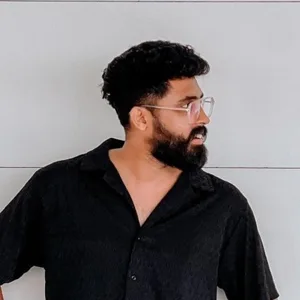 By Anandu G Prakash, co-founder and lead photographer · Updated Thursday 19 November 2026
A Kerala Muslim wedding centres on the nikah, a marriage contract made before a qazi and two witnesses, usually between the groom and the bride’s father or guardian. The groom gives the mahr, a gift to the bride. Before it comes the mylanchi night, with henna and oppana, and after it the feast, usually biryani.
This is the deep dive from our guide to Kerala wedding traditions. We’ve photographed 200+ weddings since 2017, and Anandu has shot more than 1,000 on his own. We know where the day speeds up, where it slows down, and exactly when the biryani arrives, because everyone knows exactly when the biryani arrives.
Kerala Muslim weddings at a glance, region by region
About 26.56% of Kerala is Muslim, according to Census 2011 data, and that quarter of the state has never agreed to run a wedding one single way. The biggest differences are between the Malabar coast, inland Malabar and the rest of Kerala.
| Region | What stands out | Worth knowing |
|---|---|---|
| Malabar coast (Kozhikode, Thalassery, Kannur) | The groom moves into the bride’s family home, in a room decorated for the couple | In some families the nikah and the wedding feast are months apart |
| Inland Malabar | The bride moves to the groom’s home | Malappuram is the one Muslim-majority district |
| Southern Malabar | The whole wedding is usually done in a single day | Weddings moved from night to daytime by the 1970s |
| Central and south Kerala | Methan, Rowther and Kutchi Memon families, each with their own customs | Little is written down, so ask the family |
The Kerala Muslim wedding, event by event
Religion asks for two things: the nikah and the valima, the feast after it (Fathima, 2021). Kerala families then add about a dozen more, each with its own menu, which is where the trouble with belts begins.
- The word is given. Older men from both families meet and agree the match, the vakkukodukal, sometimes with a gold bangle or coin for the bride (Fathima, 2021).
- The mylanchi night. Henna for the bride, usually a day or a few days before the wedding.
- The nikah. The marriage contract, before a qazi and two witnesses, at the bride’s house, a mosque or a hall (Kerala Tourism).
- The register. Since 2008, every marriage in Kerala has to be registered with the local panchayat or municipality (Information Kerala Mission).
- The feast and the welcome. Biryani, then the couple’s welcome into their new home, which in parts of Malabar is the bride’s.
The mylanchi night and oppana
Mylanchi means henna. Elders apply it to the bride’s hands and feet (Kerala Tourism), and from then until it dries she can’t do much with either, which is the one evening of her life the whole family insists she sit still and be waited on.
Then comes the dance. In oppana, “around fifteen maidens dance around her,” traditionally at the bride’s house, and the groom’s family has a men’s version with the groom at the centre (Kerala Tourism). The songs tease the couple about married life, so the bride spends the evening being serenaded and roasted at the same time, by fifteen people, in rhyme.
Some weddings add duffmuttu, a frame-drum performance for “nuptial ceremonies,” usually by six players (Kerala Tourism). The songs are Mappila songs, and the mylanchi ones have their own name: Mailanchi Pattu (Mappila songs).
The nikah and the mahr
The nikah is short and serious, and it’s the one part of the wedding nobody tries to make bigger. Here is who does what.
| Who | Their part |
|---|---|
| The qazi | Presides over the contract |
| The groom | Accepts the marriage and gives the mahr |
| The bride’s father or guardian | Gives the bride in marriage, often with a handshake |
| Two witnesses | Witness the contract |
| The bride | Consents; whether she sits in the room varies by mahallu |
The mahr is the groom’s gift to the bride. Among Mappilas it’s traditionally a small amount of gold, three to ten sovereigns, agreed by the two fathers (Kerala Tourism). In 2016 one Malappuram bride asked for 50 books instead (The News Minute), which is the most romantic thing a bookshop has ever been part of.
Whether the bride sits in the room varies. In 2022, a Kozhikode bride sitting in the mosque for her own nikah was reported as “a not so common practice” (The News Minute), so ask your mahallu what yours allows.
Malabar and the rest of Kerala
On the Malabar coast, families were traditionally matrilineal: the bride stays in her family’s house and the groom moves into a room decorated for the couple, mostly at her parents’ expense (Kerala Tourism). One study puts the groom’s position perfectly: “master of his own chamber, but stranger in the house” (Fathima, 2021).
In Thalassery that stranger gets fed. The custom of Puyyappla Perukkal can mean up to 100 dishes over 40 days from his mother-in-law (BBC Travel), which makes it the only welcome in the world where the son-in-law needs a new belt by week three.
Inland, the bride usually moves to the groom’s home, and in Southern Malabar the whole wedding is “typically completed within a single day” (Kerala Tourism). Central and south Kerala have their own communities, Methan, Rowther and Kutchi Memon among them (Islam in Kerala), and the honest guide there is the family.
Kerala Muslim wedding dress code: bride, groom, cousins and guests
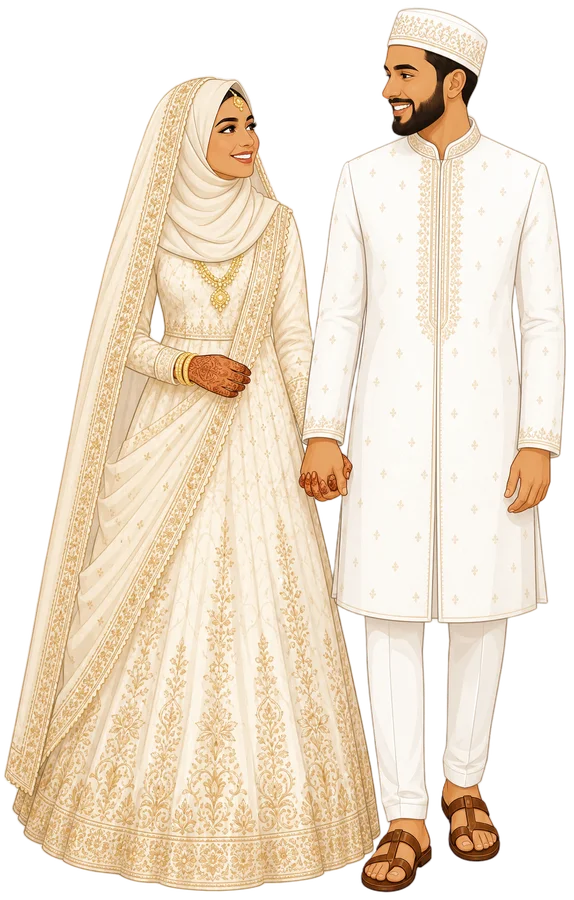
The traditional Mappila bride wore a kachi mundu and an embroidered kuppayam blouse, with a thattam over her head (Kerala Tourism). Today it’s more often a lehenga, a gown or a silk saree, and one Calicut couple changed outfits at every event, from ivory and gold for the nikah to a fuchsia lehenga and a peach sherwani for the reception (WeddingSutra).
| Who | Usually wears | Worth knowing |
|---|---|---|
| Bride | Silk saree, lehenga or gown, with a head covering, and gold | Often a different outfit for each event |
| Groom | White mundu and shirt or a kurta; a sherwani or suit at the reception | A cap is common at the nikah |
| Women cousins | Salwar, lehenga or saree in coordinated colours, with a dupatta | The mylanchi night is where the colours get planned |
| Men cousins | White mundu and shirt, or matching kurtas | Keep it simple next to the groom |
| Guests | Modest clothes: covered shoulders and legs | Women may want a scarf for the nikah |
What cousins wear
Cousins coordinate, and the best advice is to match the palette, not the outfit. One Malabar wedding guest wore purple and dark blue while her sister wore turquoise and purple (Shocks and Shoes): related, not identical, which keeps the groom’s side from mixing them up all night.
The best cousin story we found came from a Tirur bride who built her lockdown wedding with her family. For one event she wore a crimson thattam made from her mother’s 20-year-old dupatta (The News Minute), and somewhere every mother who ever said “don’t throw that out” felt very proud.
The gold
Mappila jewellery mixes Arab, Persian and Kerala styles, from the ilakkaththali and mulla mala at the neck to the thulasseri vala on the wrist and the padasaram at the ankle (Kerala Tourism). Brides wear it in layers, and by the reception, in a warm hall in May, she can feel every single one of them.
The feast: biryani and everything before it
Biryani has only been the main course for 35 to 40 years, since the Gulf migration. Before that it was “piping hot ghee rice” with chicken curry (Onmanorama), and ghee rice has taken the demotion with great dignity: it still headlines the nights before.
| When | What’s served |
|---|---|
| The invitations | A bajaar platter of sweets and cake, with sulaimani tea |
| The nights before | Ghee rice |
| After the nikah | Unnakkaya, chatti pathiri and irachi pathiri |
| Before the biryani | Aleesa, wheat and meat slow-cooked in ghee, with sugar |
| The wedding feast | Biryani, often Thalassery style with kaima rice |
In parts of Kozhikode, eight to ten guests once shared one big plate, the suppara, and the custom has mostly stopped (The News Minute). Which is why nobody under forty has ever had to negotiate for the last piece of chicken with nine relatives watching. In many North Kerala weddings, men and women also eat in separate areas (The News Minute), so plan the family photos around the meal, not during it.
Photographing a Kerala Muslim wedding: what to agree first
Families draw different lines on photographs, and the lines matter. A Kerala woman photographer told Kerala Insider that the state has “very limited female professional photographers,” and that many of her brides “usually aren’t comfortable in men taking their portraits” (Kerala Insider).
- Ask about cameras at the nikah. Mosques and mahallus set their own rules, so check before the day.
- Ask who covers the women’s side. If you’d like a woman photographer for the bride and the mylanchi room, ask early: Kerala has very few, so they book up first.
- Agree what goes online. Ask for a private gallery, and agree that nothing is posted without your OK. Then have the same talk with the cousin who films everything, before the mylanchi video reaches her 3,000 followers.
- You won’t wait months. Preview photos arrive within 24 hours, and the full edited set within 4 weeks of your selection.
I’ve photographed more than 1,000 weddings myself, and the first question I’d ask any family is the simplest one: what would you like kept private? The answer shapes everything else, including where I stand.
Questions couples ask
What happens at a Kerala Muslim nikah?
The nikah is the marriage contract. It's made before a qazi and two witnesses, usually between the groom and the bride's father or guardian, often sealed with a handshake. The groom gives the mahr, a gift to the bride, and the marriage is then registered.
What is the mylanchi night?
Mylanchi is henna. On the mylanchi night, usually a day or a few days before the wedding, elders apply henna to the bride's hands and feet, and in Malabar women often perform oppana around her.
What do cousins wear at a Kerala Muslim wedding?
Women cousins usually coordinate colours, especially for the mylanchi night, in salwar suits, lehengas or sarees with a dupatta or scarf for the nikah. Men cousins often wear a white mundu and shirt or matching kurtas. Coordinated works better than identical.
What should a guest wear to a Kerala Muslim wedding?
Dress modestly: covered shoulders and legs, and a scarf or dupatta for women at the nikah. A saree, salwar or long dress works for women, and a shirt with a mundu or trousers for men. Non-Muslim guests aren't expected to wear Islamic dress.
What is the Kerala Muslim wedding dance called?
Oppana. About fifteen women sing Mappila songs and clap around the seated bride, usually on the mylanchi night. There's a men's version for the groom, and some weddings also have duffmuttu, played on a frame drum.
What food is served at a Kerala Muslim wedding?
Biryani is the main dish today, often Thalassery style with kaima rice. Ghee rice is common at the events before the wedding, along with pathiri, aleesa and sweets like unnakkaya.
Planning your Kerala Muslim wedding?
Tell us the events, from the mylanchi night to the reception, and what you’d like kept private, and we’ll plan the coverage around it. See how our Muslim wedding photography works. Planning a mixed wedding, or marrying into a Hindu family? The Kerala Hindu wedding guide is the best next read.
Co-founder and lead photographer at Hallowed Photography, Kochi. He started Hallowed in 2017, has photographed more than 1,000 weddings, and holds two international Fearless Photographers awards.