
Wedding traditions · Planning
Haldi ceremony
 By Anandu G Prakash, co-founder and lead photographer · Updated Friday 20 November 2026
The haldi ceremony is a pre-wedding ritual where family and friends apply turmeric paste to the bride and groom, to bless them and give them a glow before the wedding. It’s usually held a day or two before the wedding or that morning. Guests wear yellow, and the whole event runs a few hours. In Kerala, it’s a newer arrival that’s now part of many weddings.
Every photo here is from one real Kerala haldi: Harsha and Abilash’s. We took 2,099 photos that evening, and each one recorded the time it was taken. So instead of guessing how long a haldi lasts, we checked.
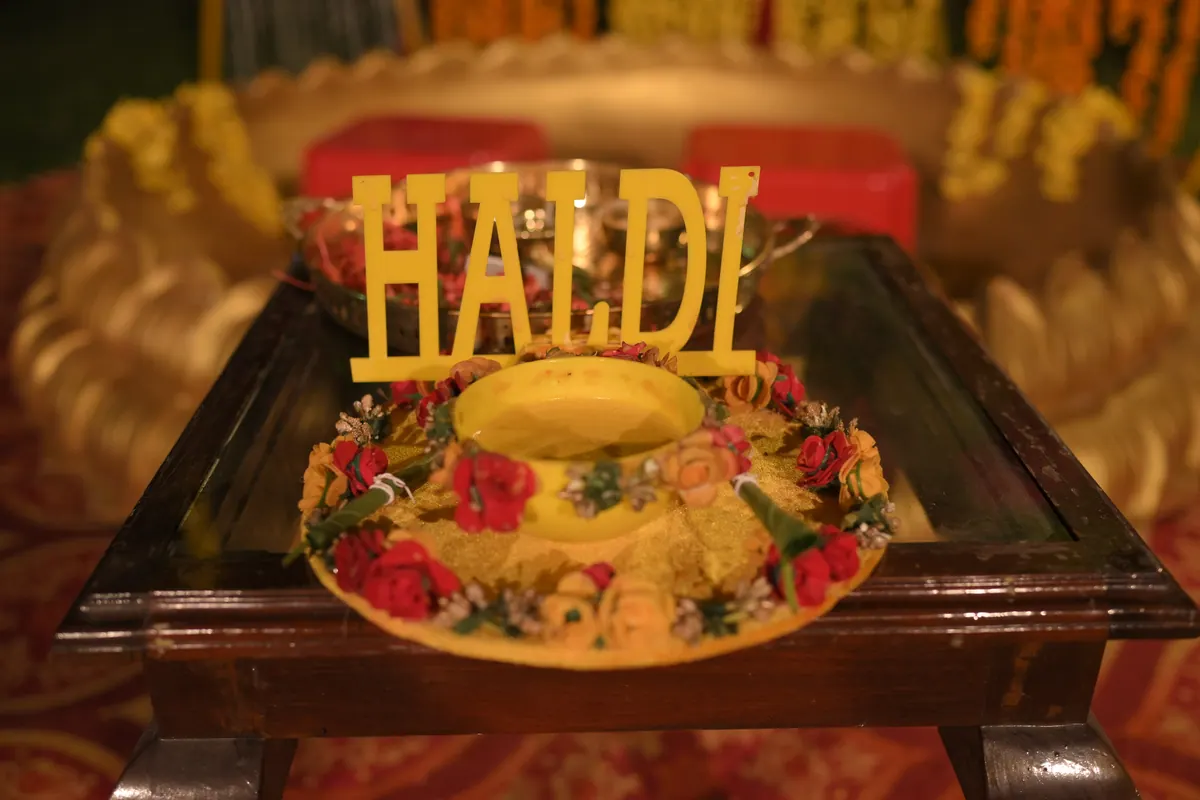
What a haldi ceremony is
The short version: “In many Hindu communities, turmeric paste is applied to the bride and groom as part of pre-wedding festivities known as the haldi ceremony” (Wikipedia). Turmeric “is considered to be sacred, auspicious, and a sign of prosperity” (Indian Dermatology Online Journal). It’s also the only blessing that visibly stays on you until the next morning.
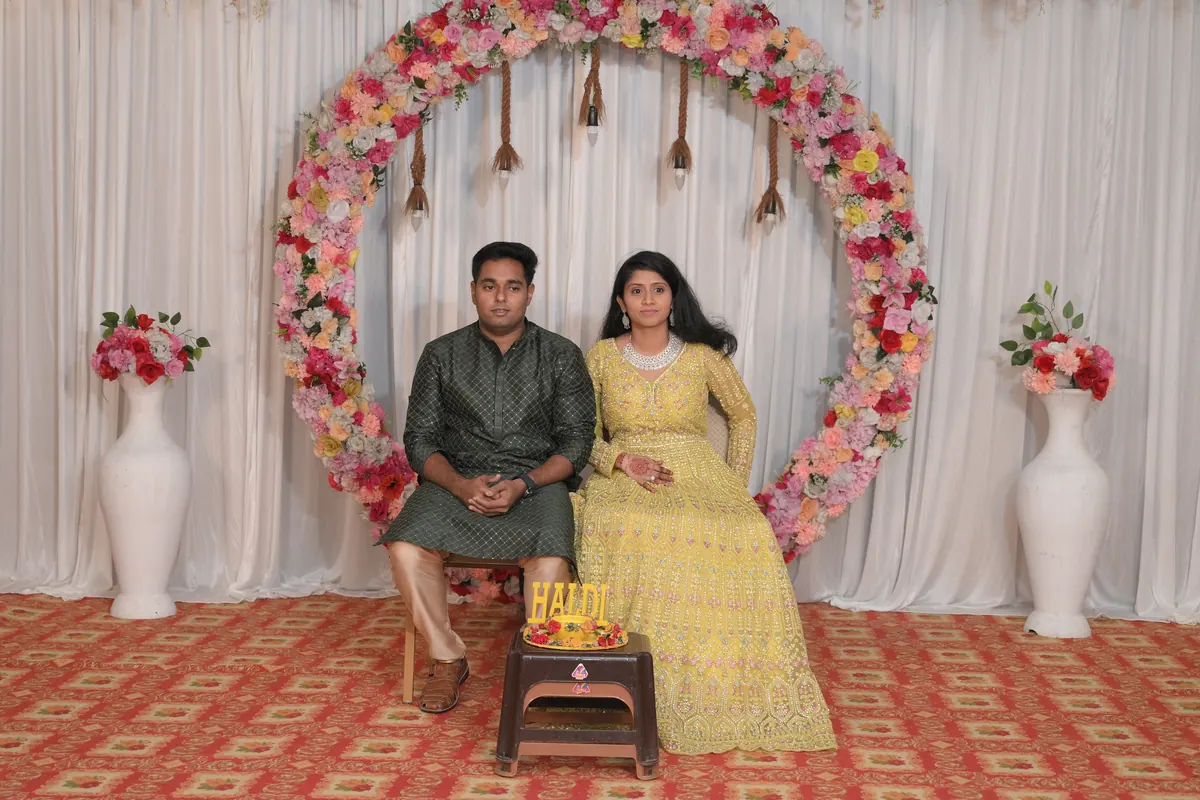
When the haldi happens
Most families hold it close to the wedding: “It's typically held a day or two before the wedding, marking the start of wedding festivities” (Fstoppers). Traditionally it’s held “at the couple’s respective residences” (Marriage.com), one haldi each, so two families get turmeric everywhere instead of one.
That’s changing. Separate haldis used to be the rule, “But now it’s one big party together so that everyone enjoys” (WedMeGood). Harsha and Abilash held theirs together, in the evening. Morning haldis are cooler; evening ones have better lights and worse traffic.
How a haldi runs, minute by minute
Here’s how Harsha and Abilash’s haldi actually ran, measured from the times on our photos. The part everyone comes for is the shortest bit of the evening.
| Part of the evening | How long it took |
|---|---|
| Couple portraits under the lights | About 45 minutes |
| Games on stage | About 10 minutes |
| Songs and speeches | About 25 minutes |
| Applying the turmeric | About 10 minutes |
| Family group photos | About 55 minutes |
| Betel leaves with the elders | About 10 minutes |
| First photo to last | About four and a half hours |
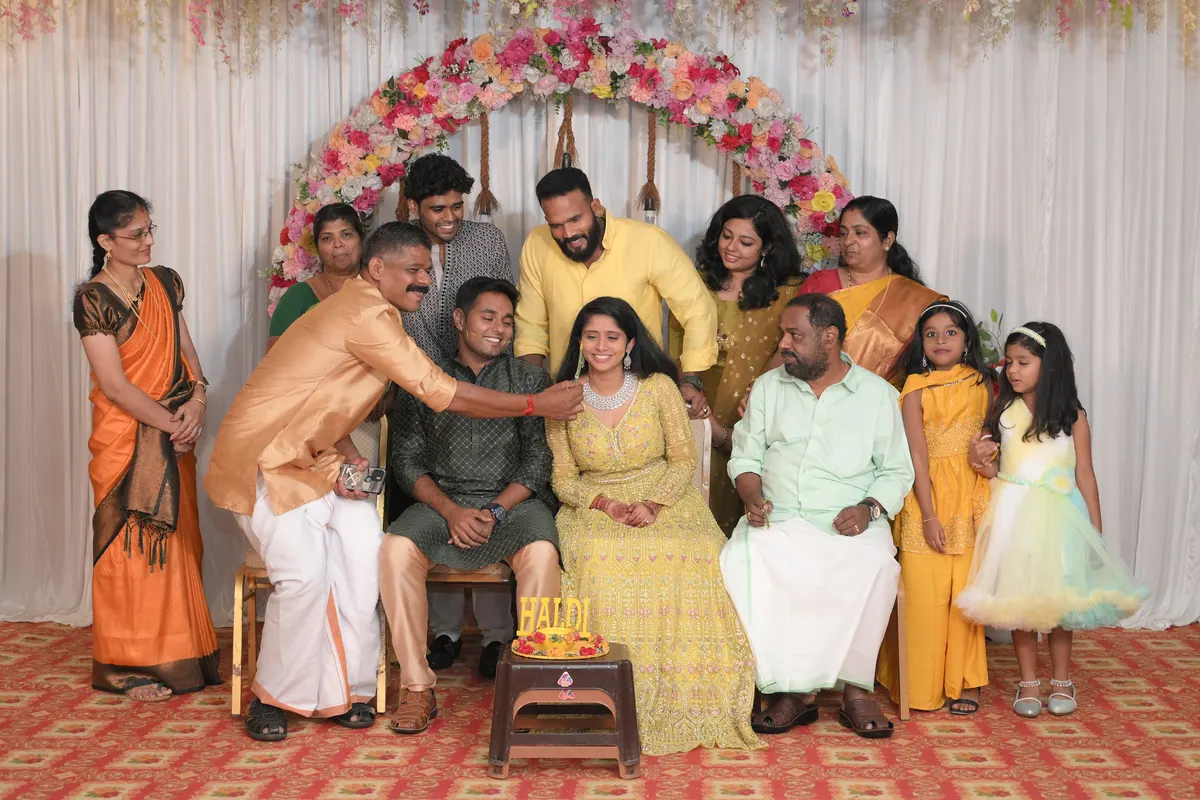
The gaps are everything in between. During the turmeric itself, each family group came up, dabbed the couple and stayed for a photo. “One of the key moments in a Haldi ceremony is when the bride's or groom's mother applies the Haldi paste to her child” (Fstoppers), so make sure the mothers go early, before the uncles get competitive.
The haldi paste
Nobody needs a chef. “At the core, you simply need turmeric powder and a liquid to form the paste” (The Knot). For a measured version, “mix 2-3 tablespoons of turmeric powder with 2-3 tablespoons of chickpea flour (besan) in a bowl”, and know that “The paste should be prepared fresh on the day of the ceremony” (WedMeGood).
| Ingredient | What it does |
|---|---|
| Turmeric powder | The colour, and the point of the whole thing |
| Gram flour (besan) | Thickens the paste so it stays where it’s put |
| Water, milk, yoghurt or rose water | Mixes it into a paste; gentler liquids suit sensitive skin |
| Sandalwood (chandan), optional | Added by some families, often with rose water |
What to wear to a haldi
Yellow, obviously, unless you enjoy standing out in photos for the wrong reason. The rule that matters more: “Wear something that you would be ok with staining” (WedMeGood). One Malappuram bride put it plainly: “I also wore a not-so-expensive yellow sharara for this ceremony as it would be ruined with haldi” (The News Minute).
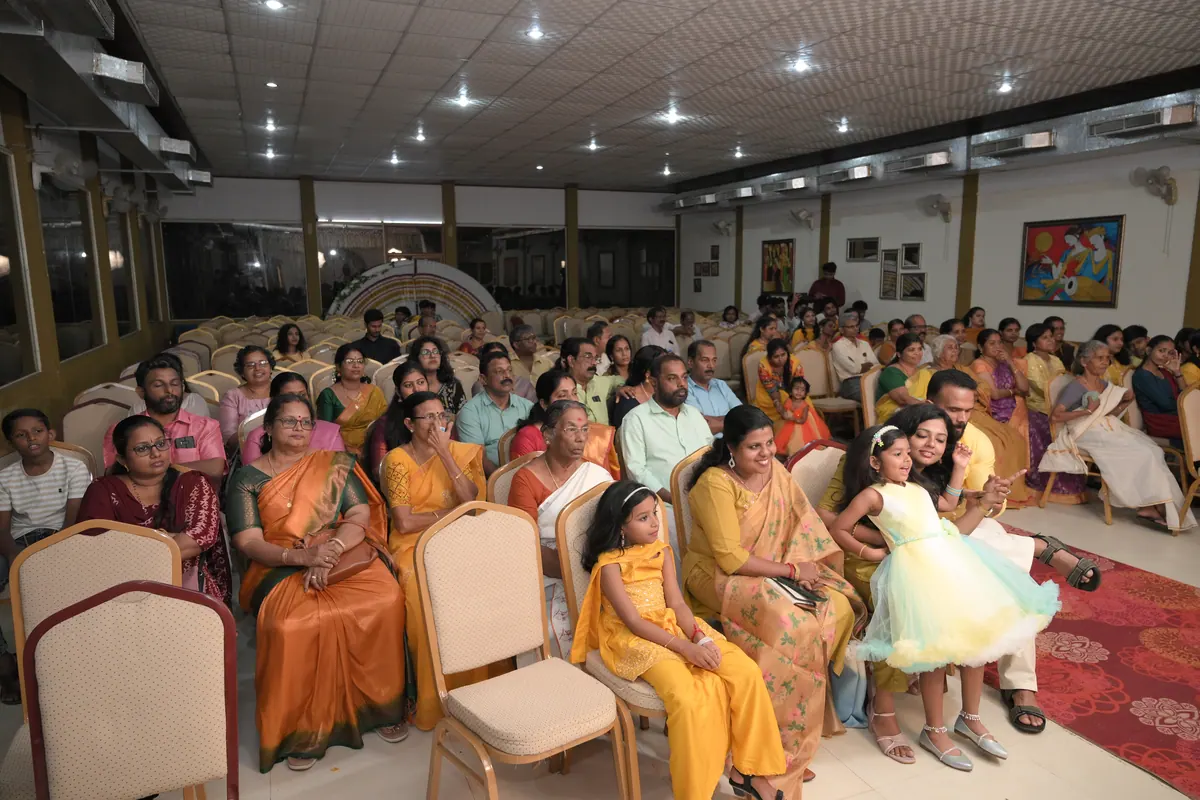
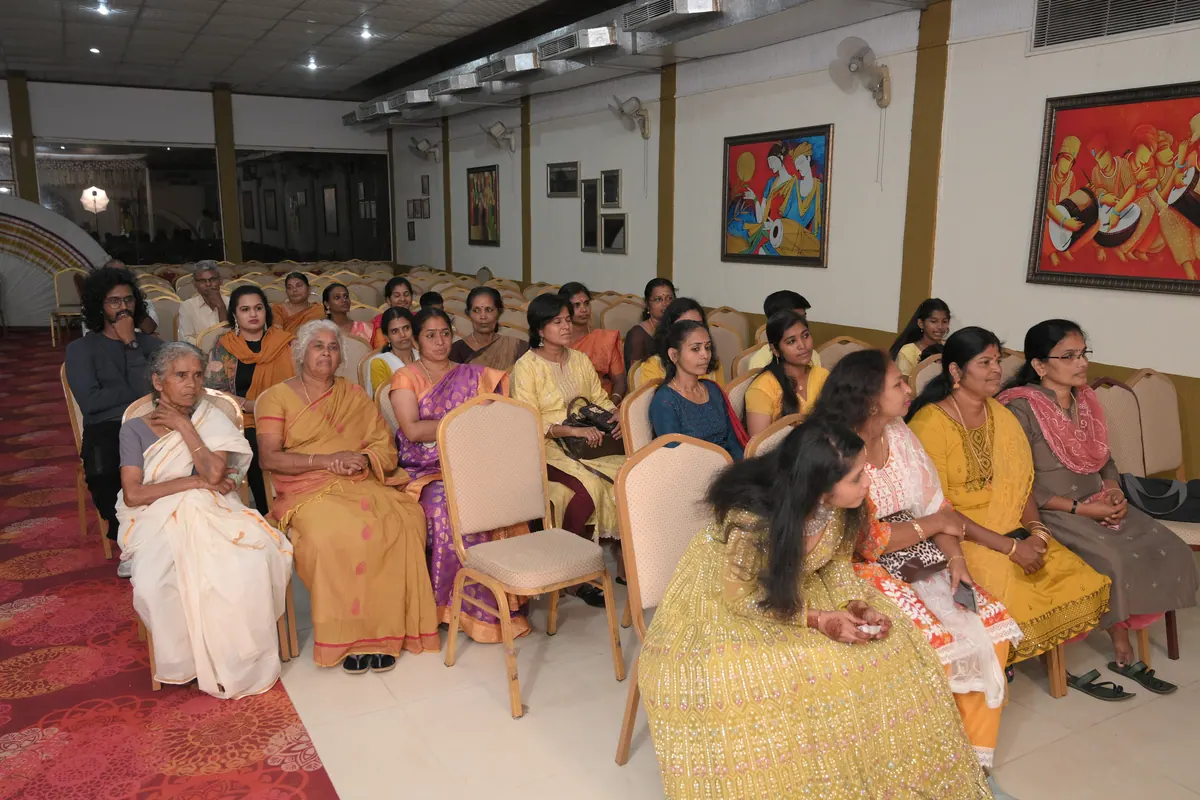
Elders tend to get the front row and the final say. If your grandmother turns up in cream, she’s earned it. Our haldi poses guide covers outfits for the couple in more detail.
Games, songs and betel leaves
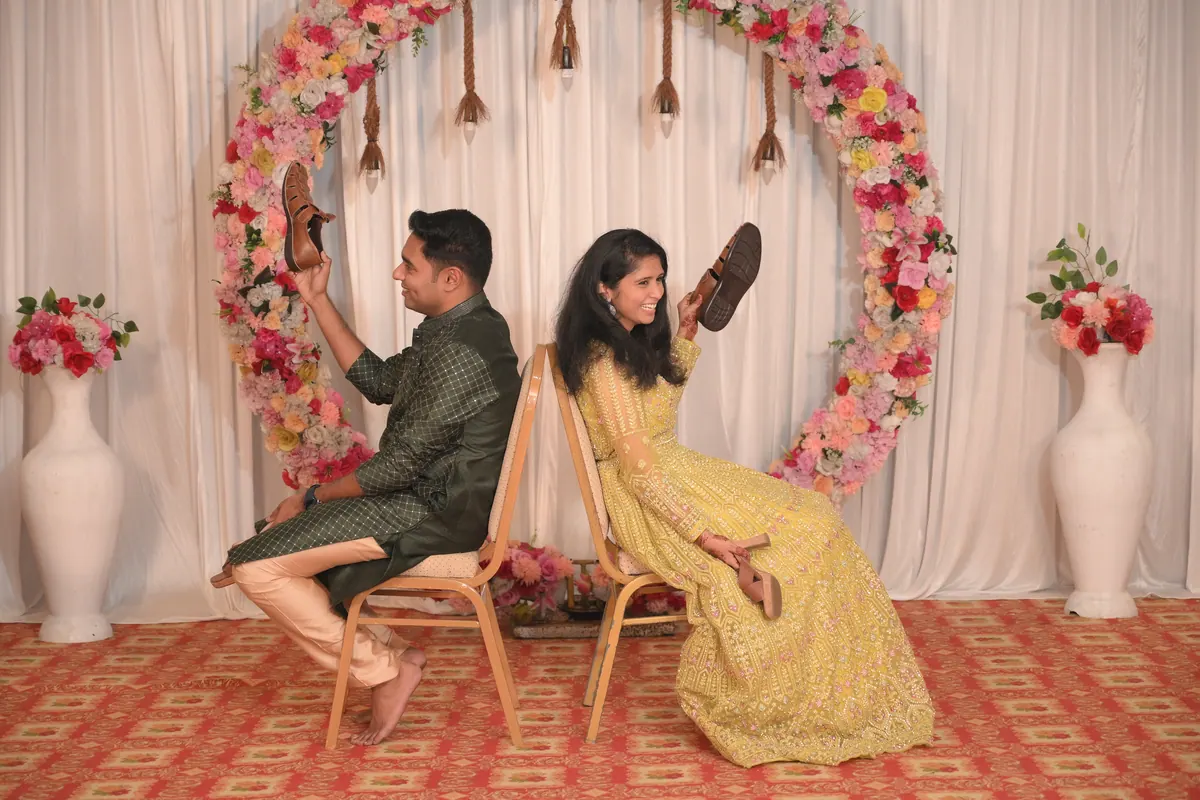
The turmeric takes minutes, so the rest of the evening needs filling. At Harsha’s, that meant the shoe game: the couple sit back to back, a shoe in each hand, and raise one to answer questions about each other. Marriages have survived worse.
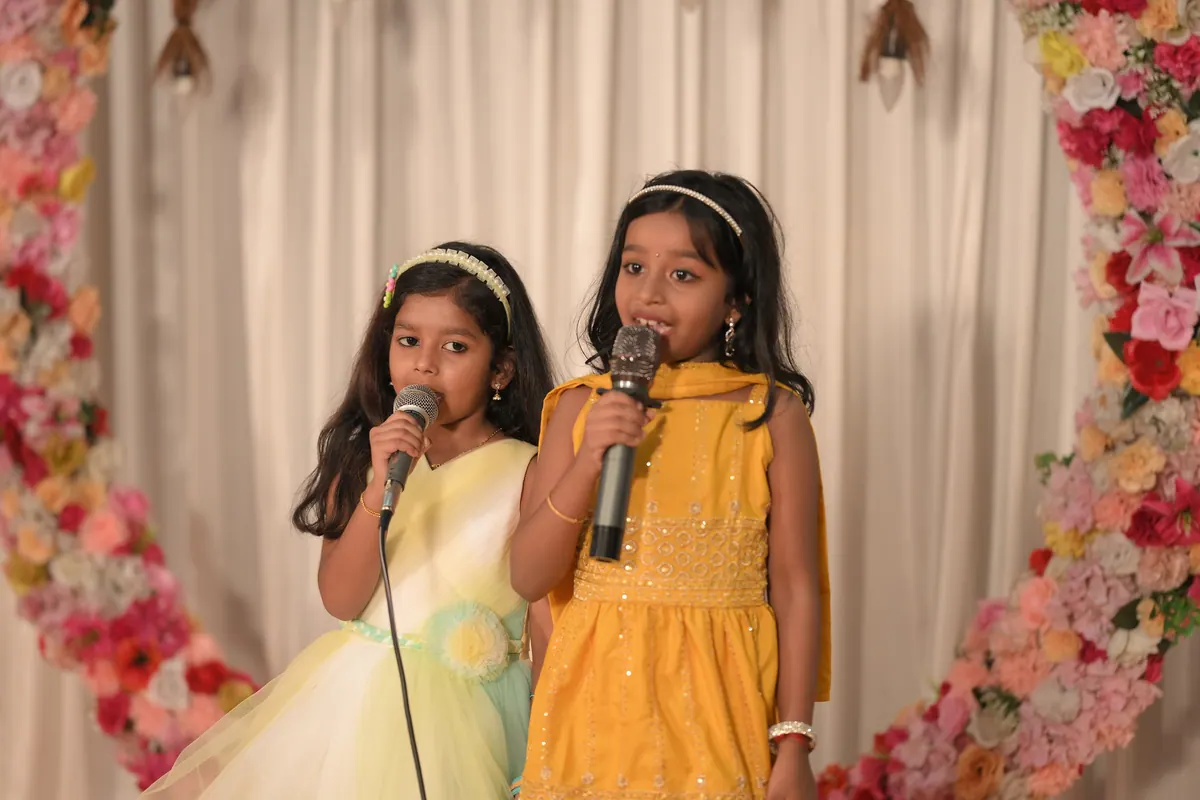
Then the songs. Guest after guest took the microphone, including two very confident children. Every Kerala family has a singer, and the haldi is where they finally get an audience.
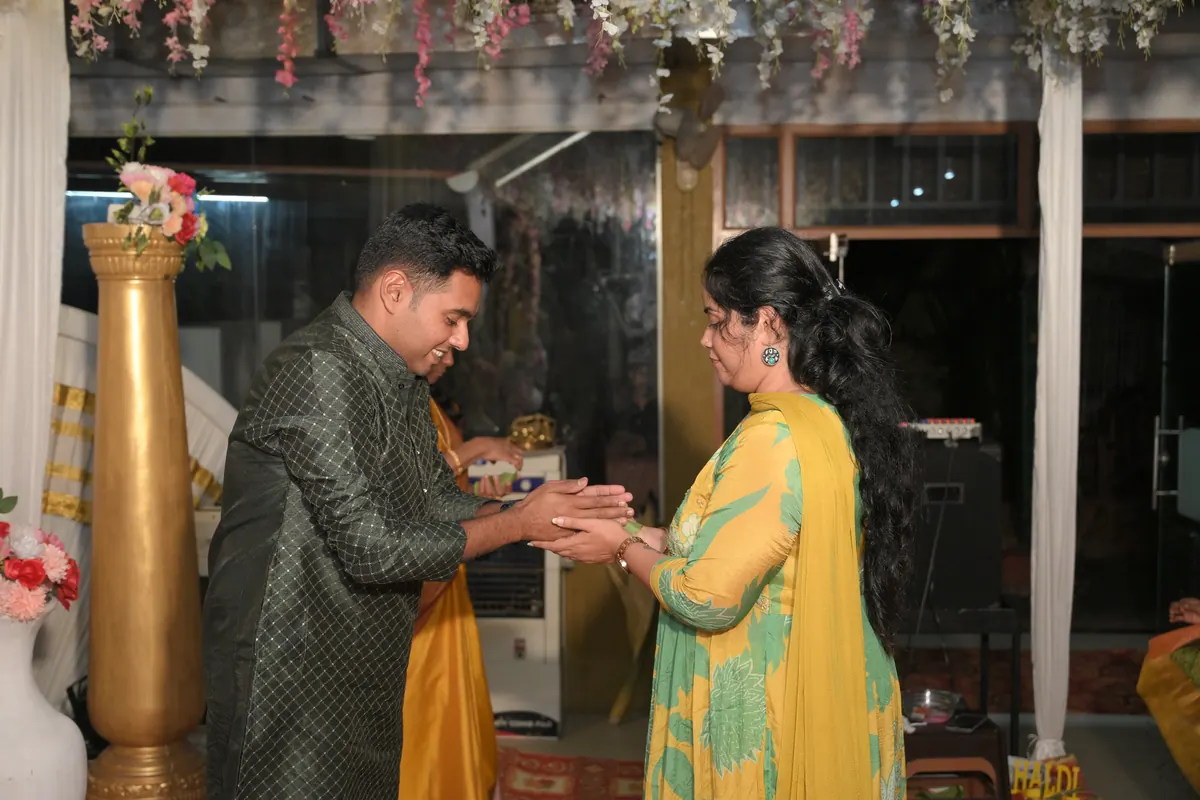
The night ended the Kerala way, with betel leaves passed between Abilash and each elder in turn. It’s quiet, it’s quick, and it’s a photo worth asking for.
Getting the yellow off before the wedding
Turmeric doesn’t leave quietly. “Curcumin is not water-soluble, which means it's going to take more than just good old H2O to remove that yellow blemish” (Tasting Table). On skin, “Dip a cloth or cotton pad in rubbing alcohol, and rub it over the discolored area on your hands until the stain disappears”, and on clothes, “None of our experts recommended using bleach on turmeric stains” (Reader’s Digest). Your wedding saree will thank you.
Patch test the paste first, too. It sounds fussy until someone breaks out the day before the wedding: “Topical curcumin can cause hives or itching” (NIH). A dab on the inside of the wrist a few days before costs nothing.
Haldi in Kerala
Kerala weddings used to be famously short: “a Malayalee Hindu wedding tends to be a quick 10-minute affair” (Deccan Herald). The same writer added, “That innate briskness used to be the most distinguishing aspect of a Malayalee wedding. Not any more.” The haldi is a big part of why.
Kerala’s own pre-wedding rituals used henna, not turmeric. At Christian weddings, “The bride applies ‘mehendi,’ a dye prepared from the plant Henna” (Kerala Tourism). One Malabar blogger wrote in 2017, “Haldi ceremony was not familiar till a decade back”, and that there “Haldi Ceremony is called Manjal Kalyanam” (My Words and Thoughts). Manjal means turmeric and kalyanam means wedding, so Kerala named it and moved on.
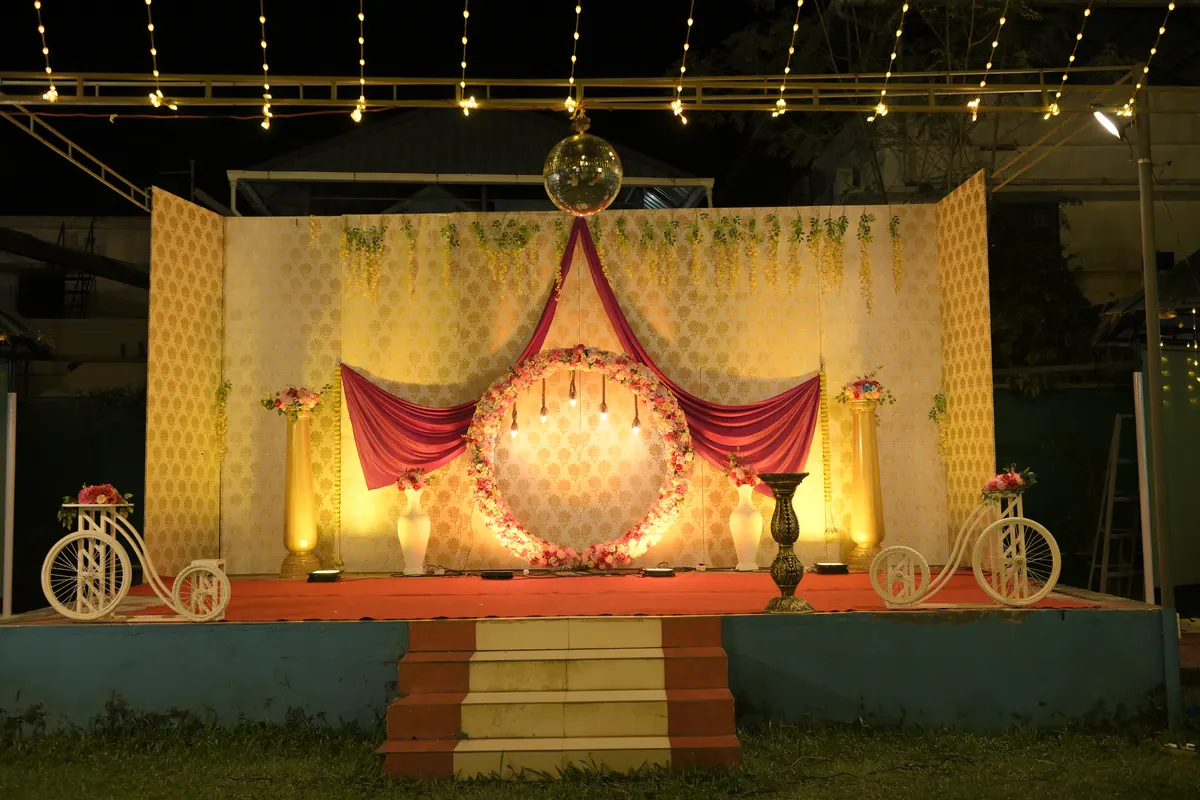
Malayalam film stars helped. When actor Aparna Das married, “photos of the couple’s haldi ceremony had gone viral on social media” (Onmanorama). Not everyone follows: one couple “opted for a carnival instead of the traditional haldi ceremony” (Onmanorama). Barely a generation in, and it’s already called traditional.
I’ve photographed more than 1,000 weddings, and nobody ever remembers how long the haldi took. They remember who got turmeric in their ear.
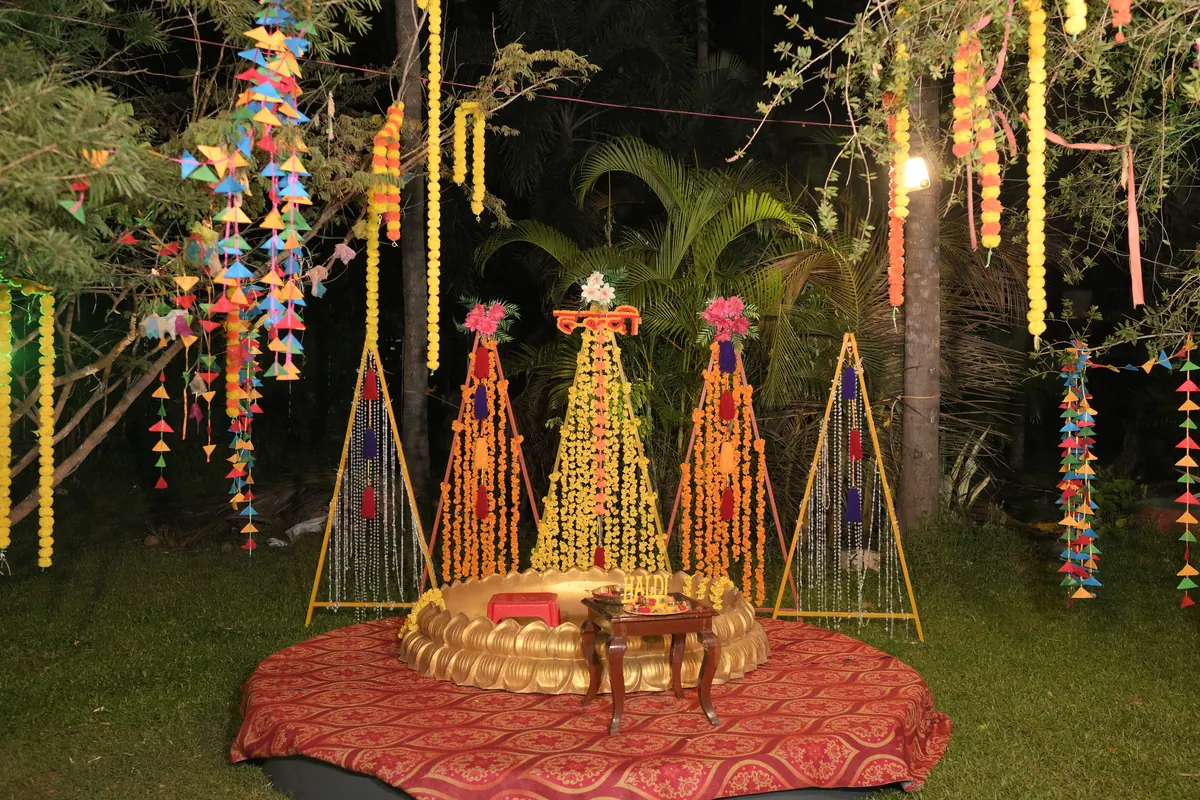
Questions couples ask
What is a haldi ceremony?
A pre-wedding ritual where family and friends apply a paste of turmeric to the bride and groom. Turmeric is seen as auspicious and a sign of prosperity, and the paste is meant to bless the couple and give their skin a glow before the wedding.
When is the haldi ceremony held?
Usually a day or two before the wedding, or on the morning of the wedding day. Traditionally the bride and groom each have their own haldi at home; many couples now hold one joint event.
What is the haldi paste made of?
Turmeric powder mixed with a liquid such as water, milk, yoghurt or rose water. Many families add gram flour (besan), and some add sandalwood. Make it fresh on the day, and patch test it on the couple's skin first.
How long does a haldi ceremony take?
Plan for a few hours. At one Kerala haldi we photographed, the evening ran about four and a half hours from the first photo to the last, and applying the turmeric took about ten minutes of it.
What should guests wear to a haldi?
Yellow, orange or another bright colour, in something you don't mind staining. Avoid white and anything expensive.
Is haldi a Kerala tradition?
Not originally. Kerala's own pre-wedding rituals used henna rather than turmeric. The haldi has arrived in the last decade or so and is now part of many Kerala weddings. In Malabar it is sometimes called manjal kalyanam.
Planning your haldi?
Tell us your haldi date, your venue and whether it’s morning or evening, and we’ll plan the photos around the light. See how we cover pre-wedding events, and for ideas, our haldi poses and mehndi poses.
Co-founder and lead photographer at Hallowed Photography, Kochi. He started Hallowed in 2017, has photographed more than 1,000 weddings, and holds two international Fearless Photographers awards.