
Kerala wedding traditions · Christian
Kerala Christian wedding
 By Anandu G Prakash, co-founder and lead photographer · Updated Thursday 19 November 2026
A Kerala Christian wedding is usually held in the morning at the groom’s parish church, inside a Mass. The groom ties the minnu, a small gold pendant, then drapes the manthrakodi, a blessed saree from his family, over the bride. The couple signs the register, and the day ends with a feast and a cake.
This is the deep dive from our guide to Kerala wedding traditions. We’ve photographed 200+ weddings since 2017, and Anandu has shot more than 1,000 on his own. We know where the day speeds up, where it slows down, and where someone always loses the ring cushion.
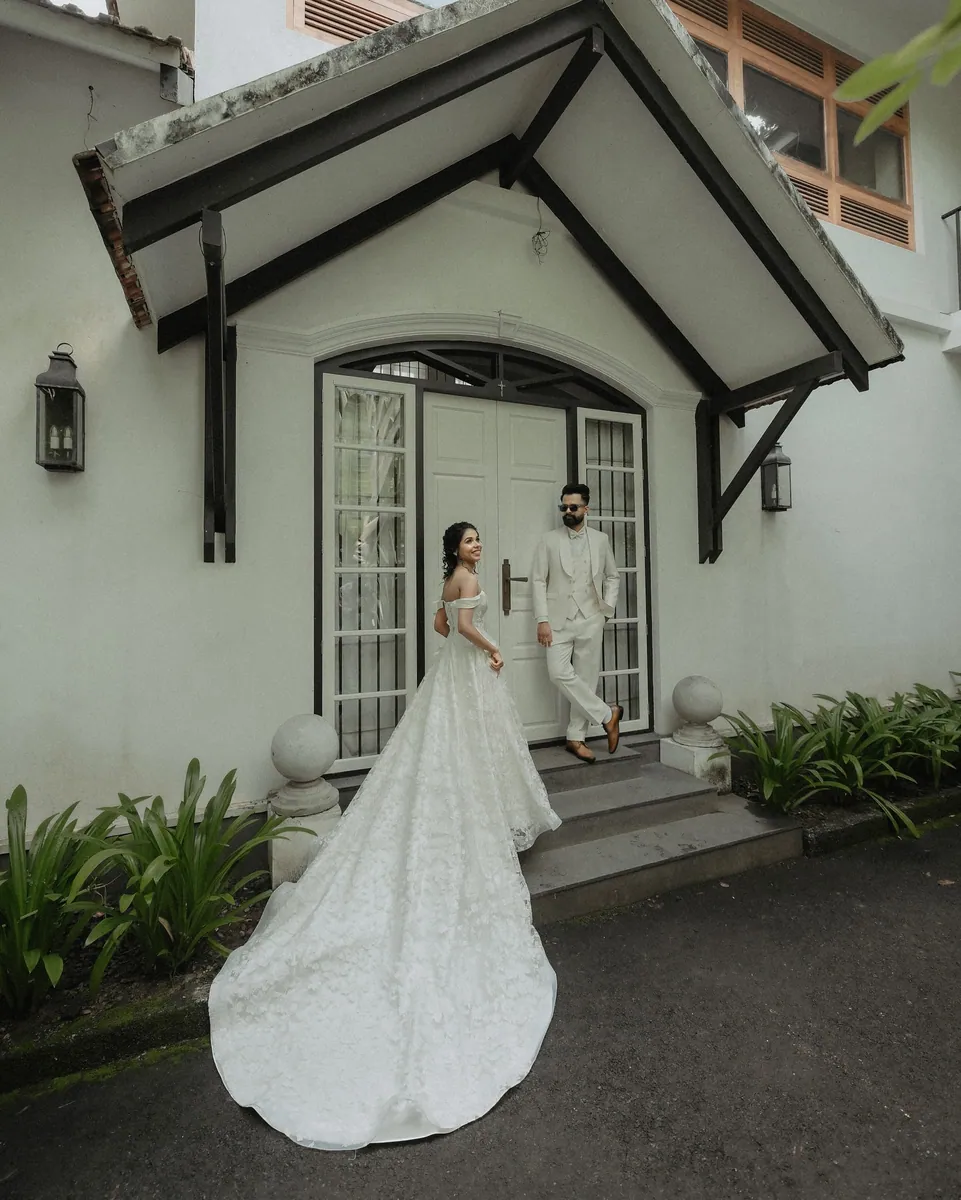
Kerala Christian weddings at a glance, church by church
About 18.38% of Kerala is Christian, according to Census 2011 data, and that 18% splits into several churches that each run the day their own way.
| Church | What stands out | Worth knowing |
|---|---|---|
| Syro-Malabar Catholic | The marriage rite sits inside the Qurbana: vows, minnu, rings, manthrakodi | The church has discouraged Sunday weddings |
| Latin Catholic | Follows the Roman Rite in Malayalam, with more weight on the rings | White gowns are common |
| Malankara Orthodox and Jacobite | Rings first, then a crowning with gold chains and crosses | The two parts are now held back to back |
| Mar Thoma | A banyan-leaf minnu and a plain gold ring | Usually held on a Thursday |
| Knanaya | Extra rituals on the eve, and milk and banana at the homecoming | Engagement at the bride’s parish, wedding at the groom’s |
| Pentecostal | Simple services, often no jewellery | Some weddings skip the ring and the minnu |
The Kerala Christian wedding day, step by step
The wedding day starts at home, with prayers and the elders’ blessings at both houses, and ends a few days later with the family visits. In between it runs on a schedule tight enough to make a railway timetable jealous.
- Prayers at home. Both families pray and the couple takes the elders’ blessing (WeddingWire). In Knanaya homes a lit lamp leads the group out to the car, never the other way round.
- The church service. Most church ceremonies start between 9am and 11am (Panigrahana), usually at the groom’s parish. In the Syro-Malabar rite, the marriage sits inside the Qurbana, right after the homily.
- The vows and the rites. Consent, the joining of right hands, the blessing and tying of the thaali, the rings, then the manthrakodi, and a pledge with right hands on the open Bible (Syro-Malabar wedding book).
- The register. The couple signs the church marriage register with two witnesses (Kerala Tourism), and the bride changes into the manthrakodi.
- The feast. Candles, the cake, and enough food to need a second plan for the leftovers.
- The homecoming. The groom’s mother welcomes the bride with a lit lamp, and over the next days the couple makes ceremonial family visits, the virunnu (Kerala Odyssey).
Before the wedding: manasammatham and madhuramveppu
Manasammatham is the church betrothal: the priest confirms that both families accept the match, in front of two witnesses. Rings now often change hands here too, though WeddingWire notes they’re “not actually supposed to” be part of it (WeddingWire). Tradition is flexible like that, mostly when jewellery is involved.
The night before the wedding is madhuramveppu, held at the bride’s and the groom’s homes. An elder, often the eldest sister or the father’s sister, feeds the bride or groom sweet rice cooked in milk (Christians of Kerala). Knanaya families add their own eve rituals: Chandam Charthal for the groom and Mylanchi Ideel, henna for the bride (Knanaya). The full madhuramveppu guide covers the evening and the prayer.
The minnu and the manthrakodi
The minnu is the small gold pendant the groom ties on the bride, and it’s the moment every camera in the church is pointed at. In the Syro-Malabar rite, seven threads are folded into three and tied with a male knot, the aankettu, while traditionally the groom’s sister stands behind the bride (Syro-Malabar wedding book).
The shape changes by church. It’s often a heart with a cross in Orthodox and Syro-Malabar weddings, and a banyan leaf in Mar Thoma weddings (Mar Thoma Church). About seven days later, the minnu usually moves onto a gold chain (Kerala Wedding Trends).
The manthrakodi is the saree the groom’s family buys and the priest blesses: “manthra” means blessed and “kodi” means new clothes (WeddingsOnline). The groom drapes it over the bride’s head, and once the feast starts she changes into it, which makes it the only saree in Kerala with both a theology and an outfit change.
How each church does it differently
Every church in Kerala keeps the same heart of the day and changes the details, which is exactly where families argue at the planning stage.
Syro-Malabar Catholic
The largest of the Catholic churches in Kerala keeps the marriage inside the Qurbana, and it has discouraged Sunday weddings (Gulf News). Check the parish calendar before you fall in love with a date.
Malankara Orthodox and Jacobite
The service has two parts: the blessing of the rings, then the crowning. Instead of crowns, gold chains with crosses are used, and the two parts are now held back to back (Malankara Orthodox service book).
Mar Thoma
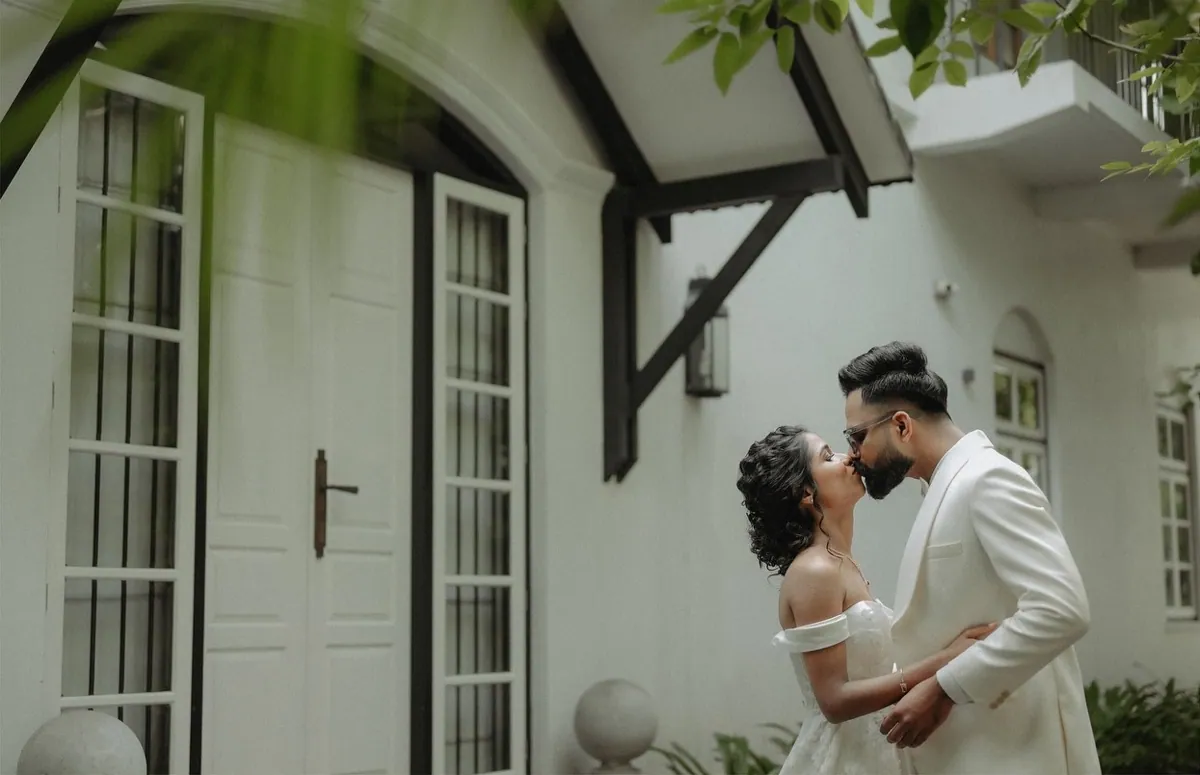
Mar Thoma weddings are usually held on Thursdays, with a plain gold ring “without engravings or adornments” and a banyan-leaf minnu (Mar Thoma Church). The groom’s mother welcomes the bride home with a lamp.
Knanaya
The engagement is usually at the bride’s parish and the wedding at the groom’s (Knanayology). At the homecoming the couple shares milk and banana, Paalum Pazhavum, from the same cup. Asked whether cutting a cake is a Knanaya tradition, Knanayology answers with one word, “No,” because milk and fruit from one cup already says the same thing. The cake has been told.
Pentecostal
Many Pentecostal brides wear no jewellery, even on the day (The Nod Mag), and some weddings skip the ring and the minnu altogether. Ask the family before anyone buys a gift that sparkles.
What cousins and family wear
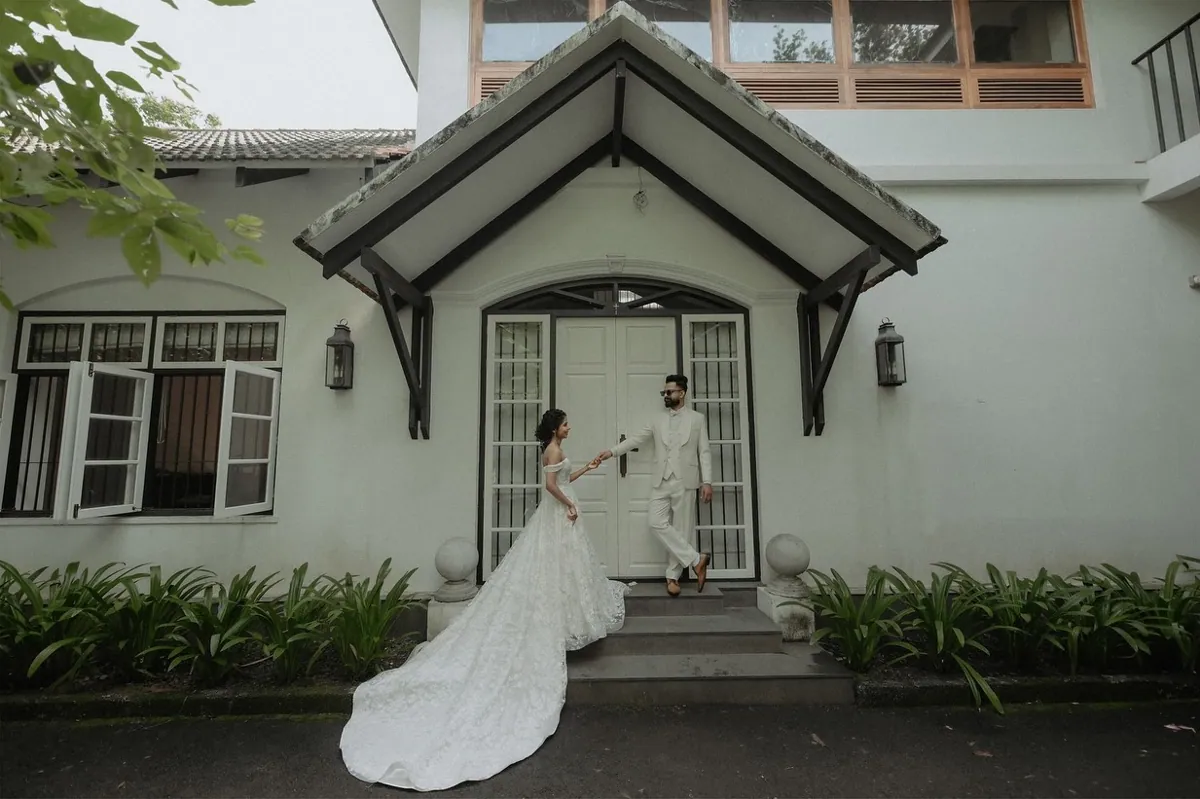
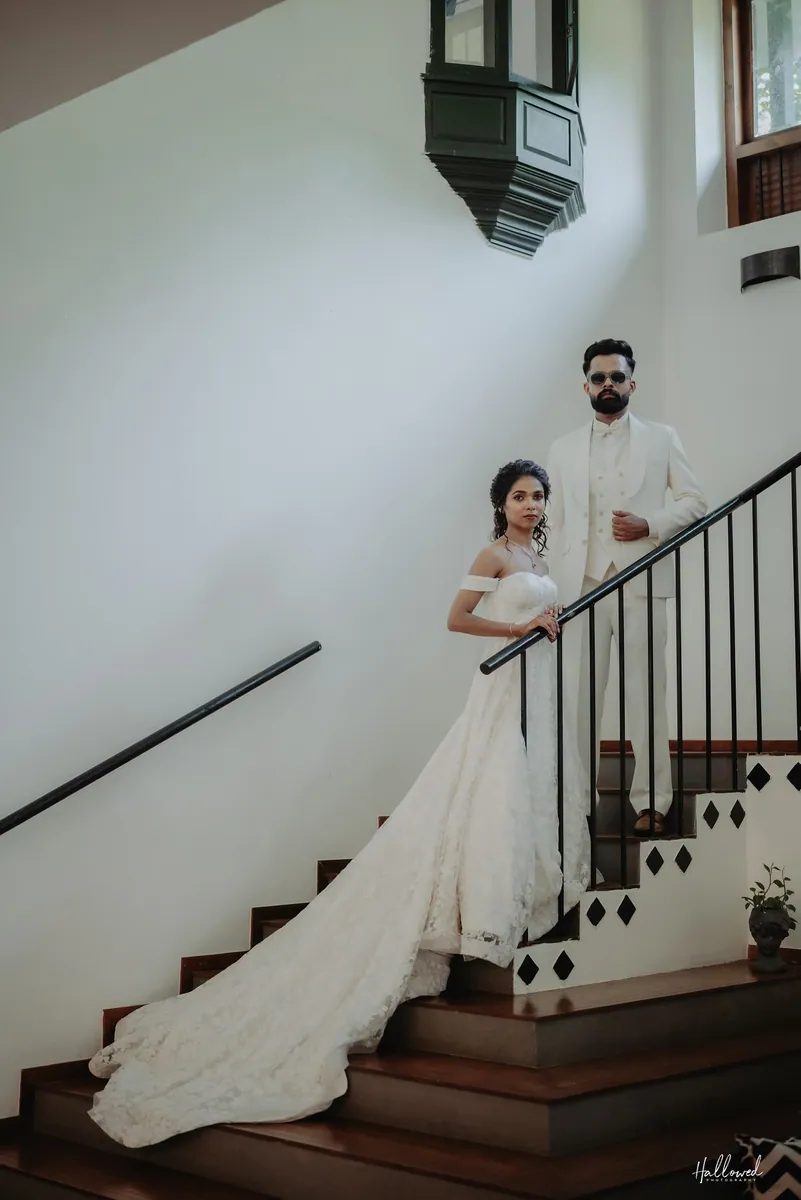
The bride usually wears a white or off-white saree with a gold border to church, and a white gown is increasingly common (WeddingWire). Grooms wear a suit or, sometimes, a mundu (Manyavar), and the cream suit is quietly winning.
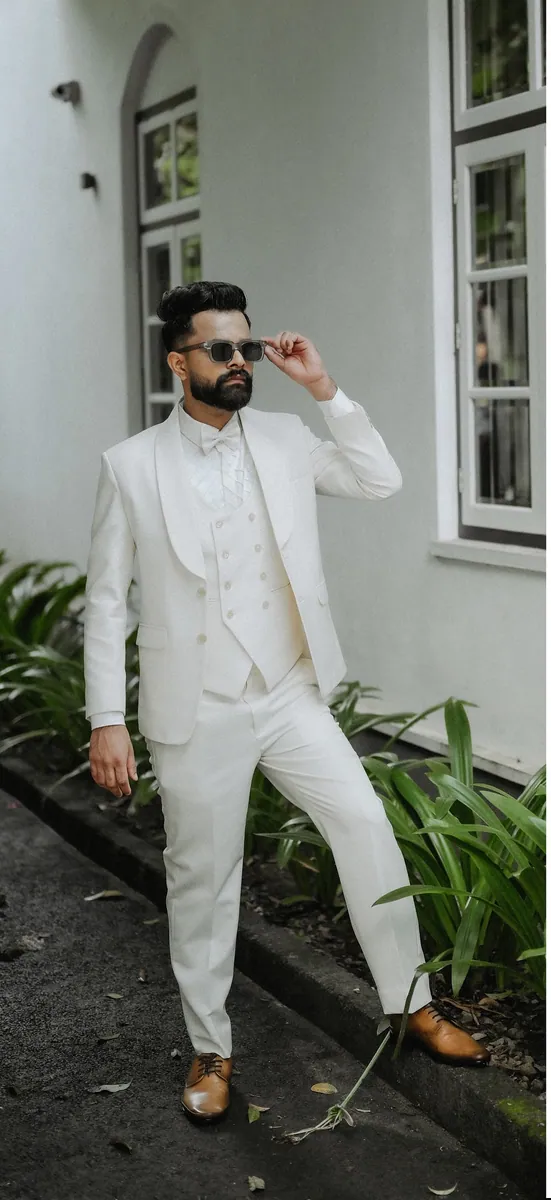
For guests, the usual call is a flowing saree or an evening gown for women, and a shirt with trousers or a suit for men. Cousins and bridesmaids often go custom and coordinated, and one Thiruvananthapuram planner says Kerala Christian families “love peach, red, orange or lemon yellow” (Deccan Chronicle). Decide the colour in the family group early, before three aunties pick three different yellows.
Two church rules catch people out. Some churches don’t allow sleeveless or deep-neck gowns (Deccan Chronicle), and some women cover their heads with a scarf or the saree pallu inside the church (Kerala Odyssey).
Decorations: church and reception
Church flowers lean white: tuberose, white roses and white orchids are the traditional choices, and the décor has to work with the church’s own architecture rather than fight it (Panigrahana). Families often bring fruit baskets, and little girls with flowers lead the couple down the aisle (WeddingWire), usually at their own pace.
Receptions go further. White and gold is the classic palette (WedMeGood), and the stage is where the lights, flowers and the couple’s chairs live. Ernakulam’s district collector has even urged families to cut down on disposable items at weddings (The News Minute), so reusable is in, plastic is out.
Photographing a Kerala Christian wedding: what we plan for
Photography inside the church has to be arranged with the priest in advance (Panigrahana), and we think the Knanaya community put the photographer’s role perfectly. Asked whether videographers should control the order of the rituals, their answer was one word: “No.” (Knanayology). We agree completely.
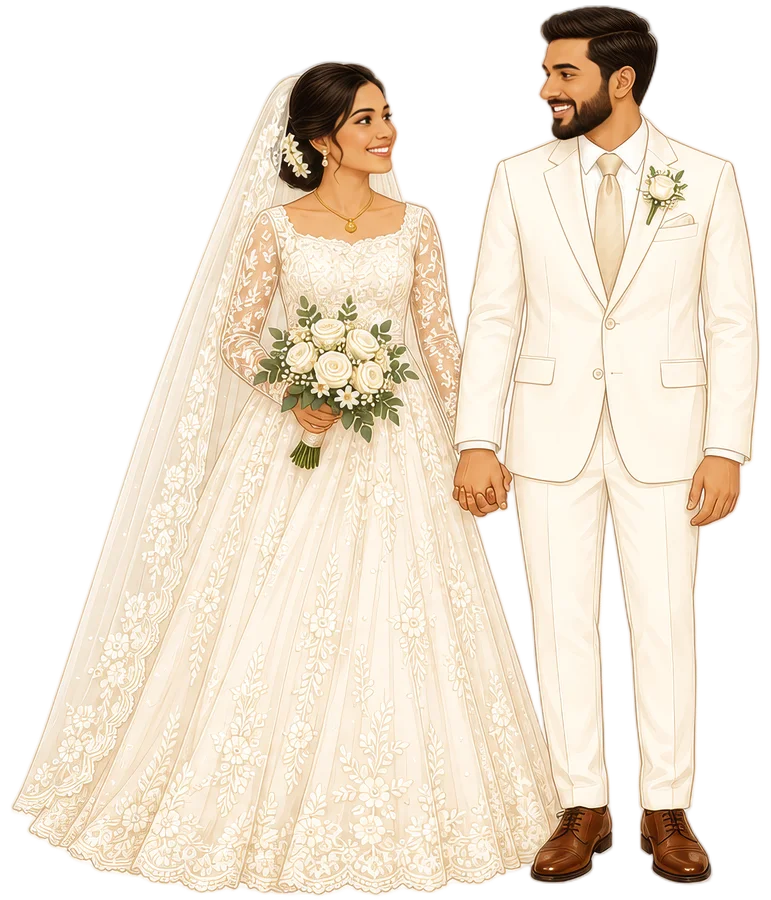
- Two bridal looks. The church saree or gown, then the manthrakodi at the feast. Plan a few portraits in both.
- The minnu is seconds long. It happens once, so settle where the photographer can stand with the priest before the service begins.
- The evening before counts. Madhuramveppu happens at two homes at once, which is a coverage question to settle early: one team, two teams, or one house.
- You won’t wait months. Preview photos arrive within 24 hours, ready to post as a story, and the full edited set within 4 weeks of your selection.
I’ve photographed more than 1,000 weddings myself, and the church ones reward the quiet photographer. Nobody remembers who stood where, only whether the moment was there.
Questions couples ask
Do Kerala Christians wear a thali?
Yes, it's called the minnu. The groom ties it on the bride during the church service, on threads drawn from the manthrakodi saree. The Syro-Malabar wedding book calls it the thaali, and its shape differs by church: often a heart with a cross, a banyan leaf for Mar Thoma weddings.
What should I wear to a Kerala Christian wedding?
Women usually wear a saree or an evening gown, and men wear a shirt and trousers or a suit. If you're family, check whether the cousins are coordinating colours. Some churches don't allow sleeveless or deep-neck gowns, and some women cover their heads in church.
What is the order of a Kerala Christian wedding?
Prayers and blessings at both homes, then the service at the church, usually the groom's parish, between 9am and 11am. Inside the service come the vows, the minnu, the rings and the manthrakodi. Then the register, the feast with the cake, the welcome at the groom's home and the family visits.
Which day are Mar Thoma weddings held?
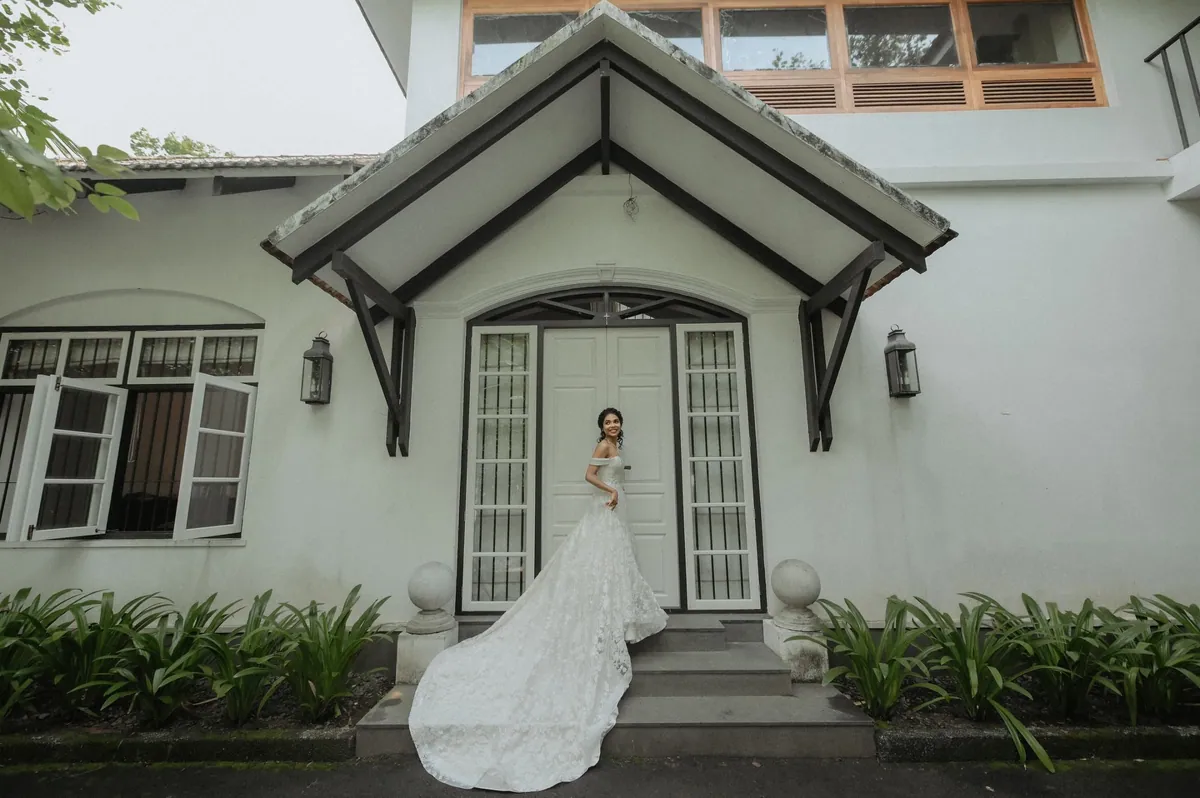
Mar Thoma weddings are usually held on Thursdays. The Syro-Malabar Church has discouraged Sunday weddings, so check the parish calendar before you fix a date.
Can we have photos and video inside the church?
Usually, but it has to be arranged with the priest in advance, and rules differ by parish. A good photographer works around the service, never the other way round.
What food is served at a Kerala Christian wedding?
Appam with stew, meat cutlets, chicken, pork, duck or fish dishes, and very often biryani, finished with the wedding cake. Kottayam weddings sometimes end with panampani.
Planning your Kerala Christian wedding?
Tell us the church, the date and the events, from madhuramveppu to the reception, and we’ll plan the coverage around the service. See how our Christian wedding photography works. If the evening before is still a mystery, the madhuramveppu guide is the best next read.
Co-founder and lead photographer at Hallowed Photography, Kochi. He started Hallowed in 2017, has photographed more than 1,000 weddings, and holds two international Fearless Photographers awards.